Finding clothes for blonde hair, blue eyes and fair skin is less about obeying a seasonal chart and more about seeing what happens close to your face. A color can make blue eyes look clean and bright, or make the whole face seem washed out before you have even noticed the garment. The useful aim is a small set of shades that looks good in ordinary daylight, with ordinary makeup, on an ordinary weekday.
Start with the undertone you actually see
Fair skin is often described as cool by default, but that shortcut misses plenty of people. Look at your face next to a plain white T-shirt and then next to ivory or oatmeal. If clear white makes the skin look calm while creamy fabric adds yellow, you may lean cool. If ivory makes you look rested and white looks a little stark, there is probably warmth in the skin. If neither is dramatic, treat your coloring as neutral and use both as reference points rather than labels.
Do this beside a window around midday, not under a warm bathroom bulb. Pull hair away from the face and skip a strong lipstick for the first comparison. A phone photo can help, but use the rear camera and the same distance for every color; automatic filters often make a weak shade look better than it does in a mirror. The question is not whether a color is pretty on its hanger. Notice whether it makes redness, shadows under the eyes, or unevenness more obvious.
Use blue eyes as a quiet accent, not a costume
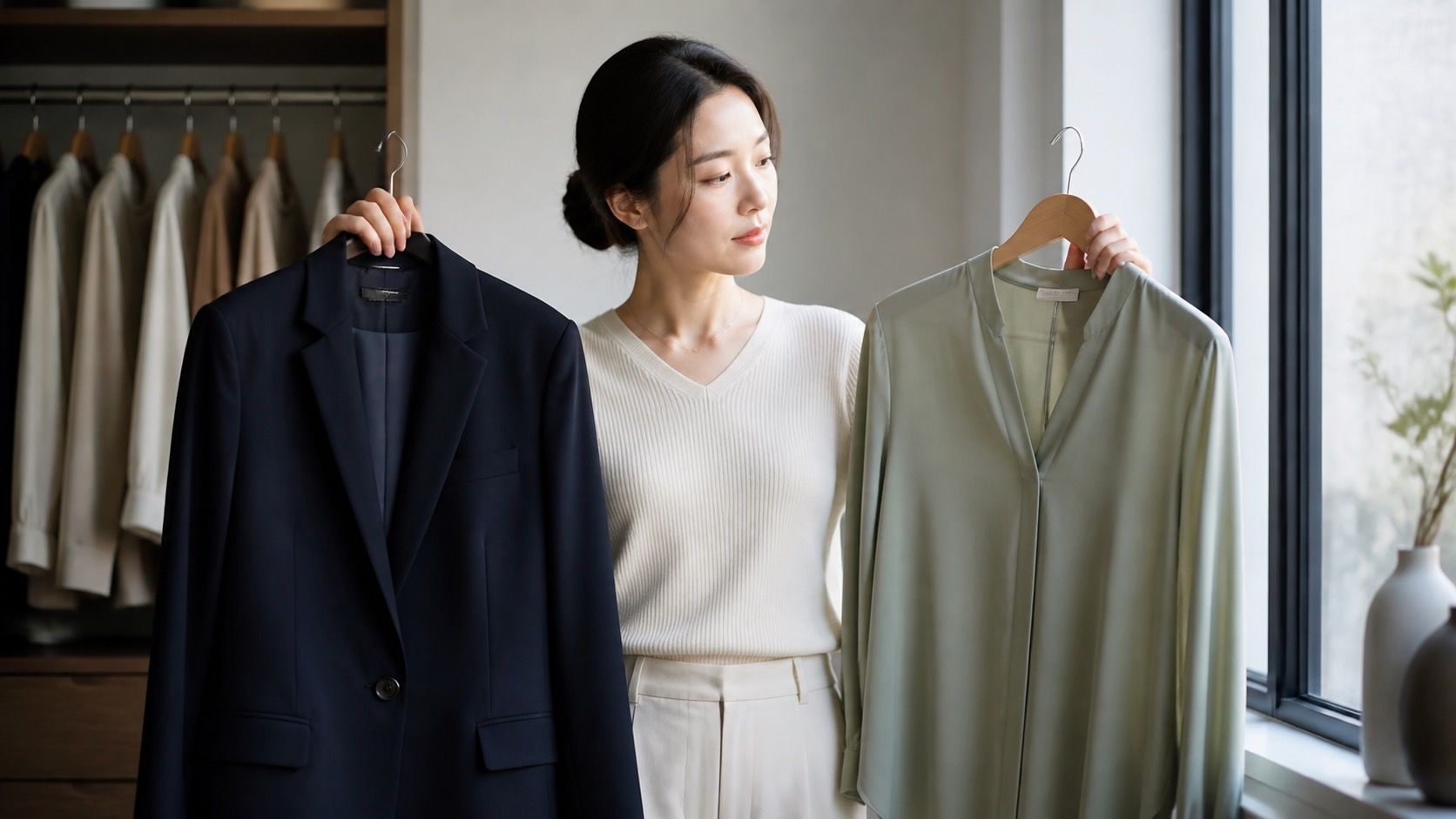
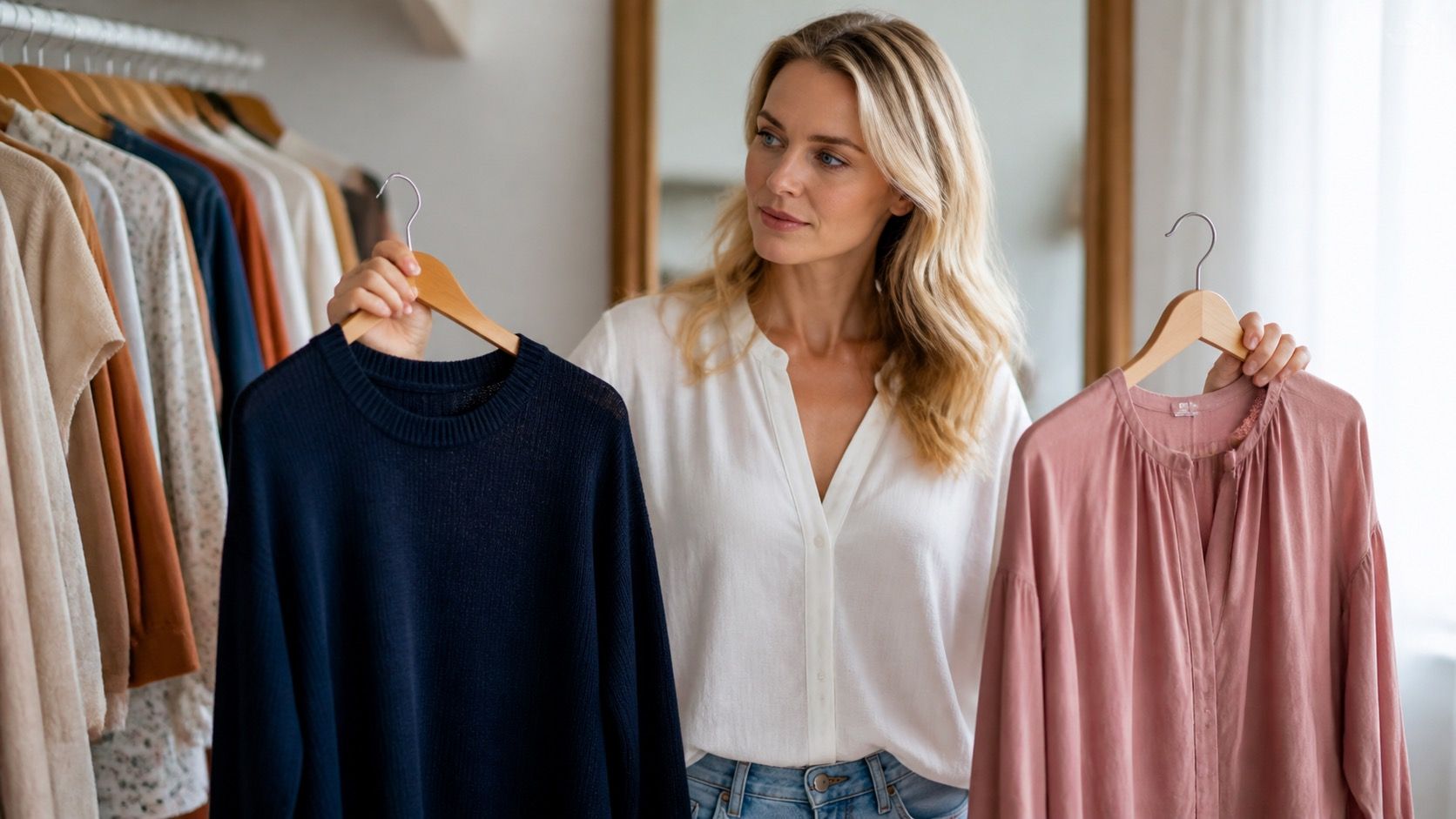
Blue eyes usually show up best beside colors with enough depth to create a frame. Navy is one of the easiest choices because it has weight without the hard edge of black. A navy knit, chambray shirt, or structured blazer lets the eye color register naturally. Denim works for the same reason, especially a medium indigo rather than a pale, faded wash that disappears beside very light hair and skin.
Other dependable choices are smoky blue, slate, soft teal, cool burgundy, and muted plum. They do not need to match the eyes. In fact, a literal bright blue can look more like a costume than a flattering outfit, particularly when it is shiny or highly saturated. If you love bright blue, keep it below the waist, use it in a bag, or separate it from the face with an ivory collar. The best result usually has one clear color note and calmer supporting pieces.
Let the shade of blonde set the temperature
Ash blonde, silver blonde, and dark blonde with little gold usually sit comfortably with cool or softened colors: dusty rose, periwinkle, blue-grey, berry, charcoal, and cool taupe. These shades echo the low contrast already present in the hair rather than fighting it. A crisp cobalt coat can still work, but it needs a little intention: a clean neckline, simple makeup, and a darker bottom half keep the color from arriving before the person does.
Honey, strawberry, and golden blonde often handle warmth better. Think soft coral, petrol blue, moss, warm navy, cinnamon-brown, or muted turquoise rather than neon orange or mustard. The distinction matters because gold in the hair can make a pale icy pastel feel disconnected, while a very yellow top can exaggerate warmth in fair skin. When unsure, choose a muted version of the warm shade. Terracotta usually asks less of the complexion than traffic-cone orange; sage is gentler than acid green.
Build repeatable outfits instead of a drawer of perfect tops
For a low-effort weekday outfit, start with ivory, soft navy, and medium denim. An ivory ribbed top, dark straight-leg jeans, and navy outerwear give fair skin some light near the face while the navy provides definition. Add silver jewelry for cooler blonde or brushed gold for warmer blonde, but keep the metal secondary. Jewelry is a useful tiebreaker, not a diagnosis: the right metal should make the outfit look settled rather than announce itself first.
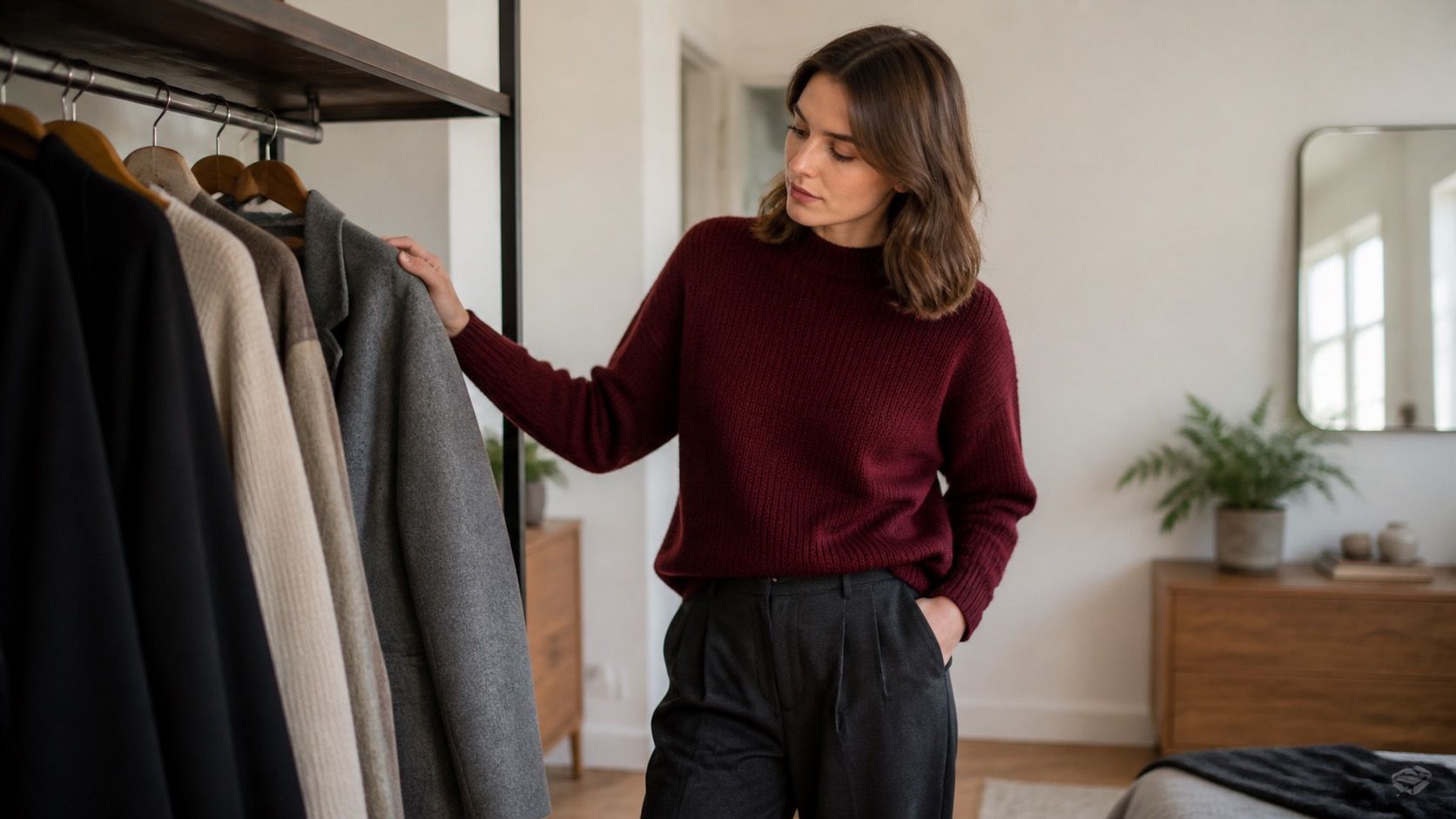
Soft rose with grey-blue denim is another reliable combination when black feels severe. The rose should have a little dust in it, not the sugary pink of a toy aisle. For a smarter outfit, try a muted berry blouse with stone trousers, or a navy dress with a soft camel coat if your blonde has warmth. A deep teal sweater with ecru jeans works well on many neutral fair complexions because it offers contrast without the visual noise of pure black and white.
| Situation | Easy color combination | Why it tends to work |
|---|---|---|
| Casual denim day | Ivory top, indigo jeans, navy layer | Light near the face with enough blue-based contrast |
| Office or dinner | Muted berry, stone, soft navy | Looks polished without making fair skin seem drained |
| Warm blonde hair | Soft coral, cream, dark teal | Keeps warmth controlled and gives blue eyes depth |
| Cool ash blonde | Dusty rose, charcoal, blue-grey | Follows the softer, cooler direction of the hair |
Colors to approach with a little care
Black is not forbidden, but a black crewneck is demanding on fair skin and pale blonde hair. It can create a sharp outline that makes the face look flatter, especially on tired days. Try black in trousers, boots, or a skirt first, then put navy, soft white, rose, or a print with some air near the face. If a black top is non-negotiable, an open neckline, a colored scarf, or earrings with a little warmth can soften the effect.
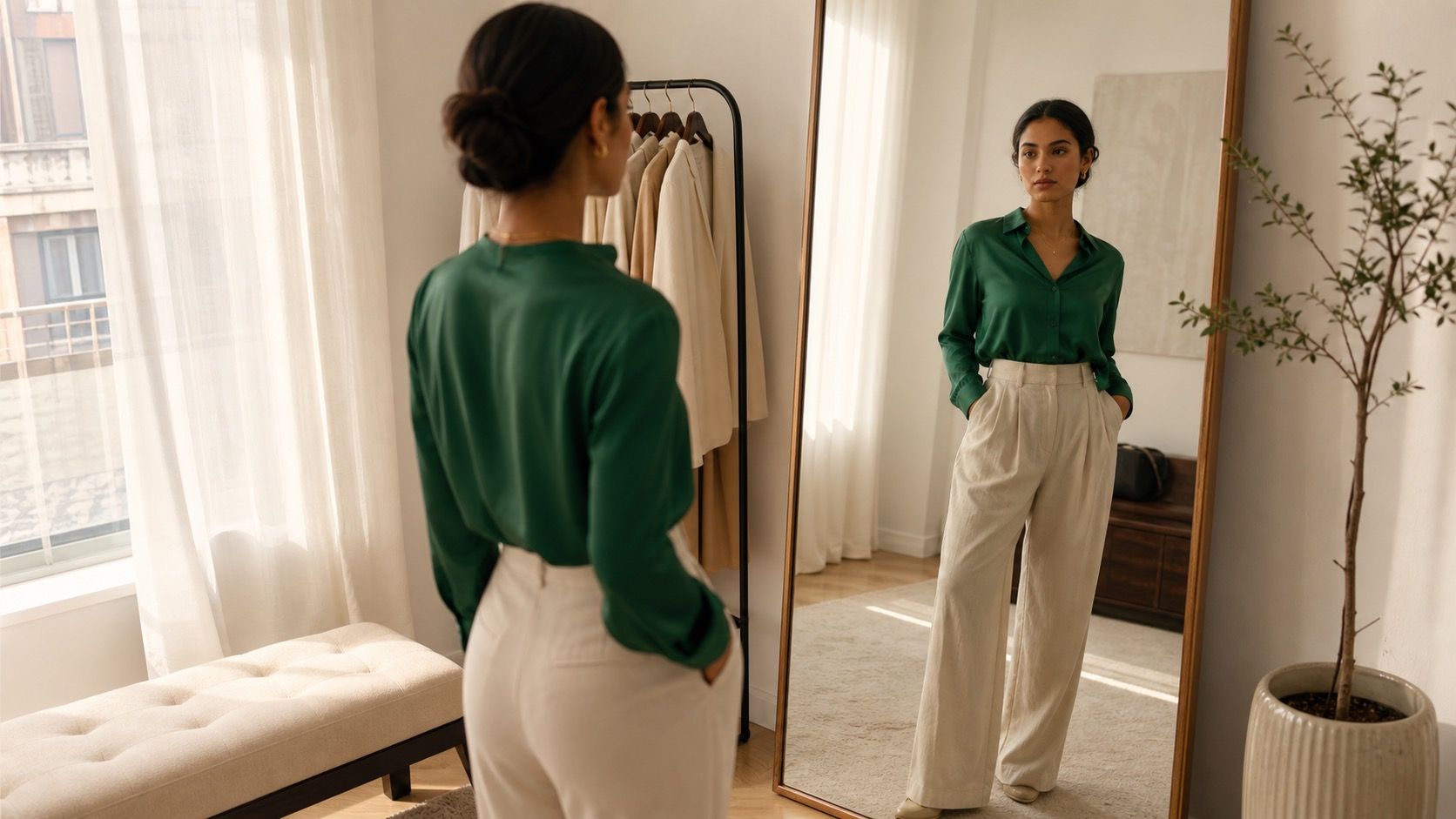
Very pale beige, washed-out yellow, and icy pastels can fail for the opposite reason: there is not enough separation between fabric, skin, and hair. The mirror test is simple. Step back two meters and squint slightly. If your features vanish before the garment becomes visible, the shade needs more depth. This does not mean every outfit needs jewel tones. A medium dove blue, mushroom taupe, or softened raspberry often gives exactly the amount of contrast that a light palette needs.
Make the final decision in the conditions you live in
Take two candidate tops into natural daylight and compare them with the same jeans. Look first at the skin around the mouth and under the eyes, then at the eye color. A useful shade usually makes those areas look clearer without much effort. A poor one may make the eyes look nice while emphasizing every shadow in the face, which is why an eye-only test can be misleading. Check the color on a day when you are not especially tanned or freshly made up; it should survive normal life.
When shopping online, save screenshots of colors that consistently work and compare product photos against them, but expect fabric to change the result. Matte cotton and wool absorb light; satin, ribbing, and glossy synthetics throw it back onto the face. Build your dependable palette around three neutrals, two deeper colors, and two lighter accents. Once you know that navy, ivory, dusty rose, indigo, and one version of teal are dependable, dressing well becomes faster than chasing a universal answer for every blonde person.