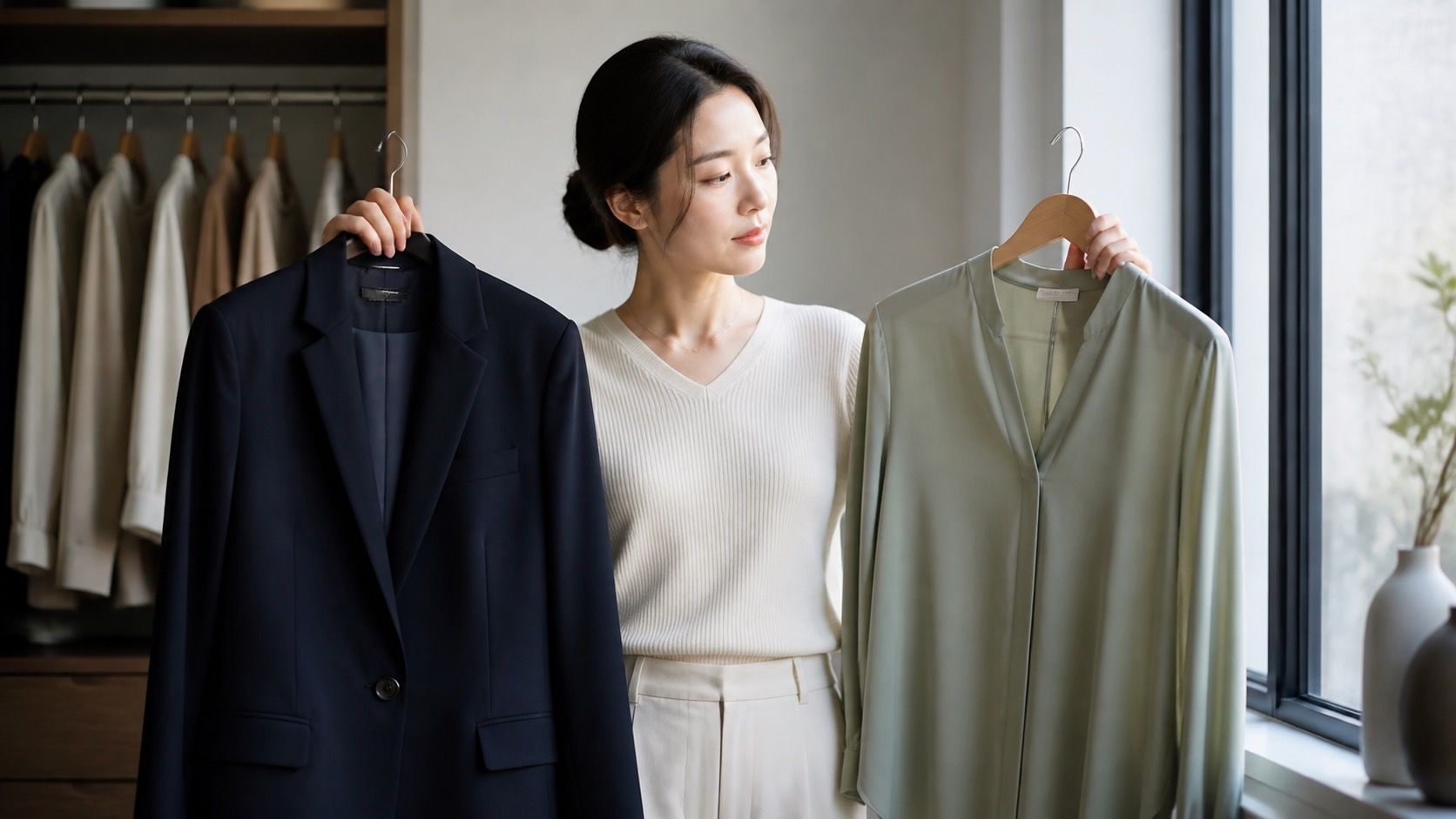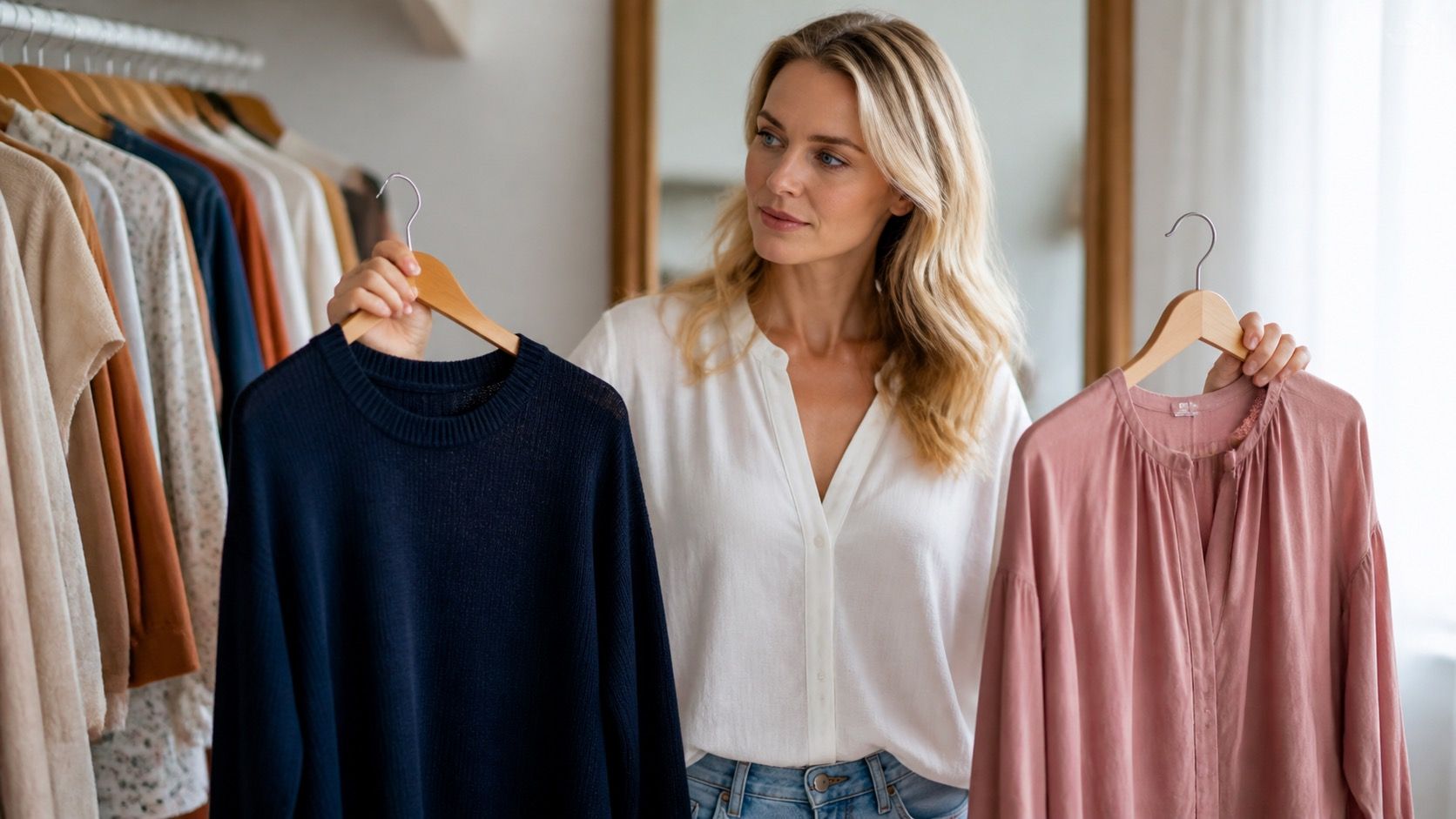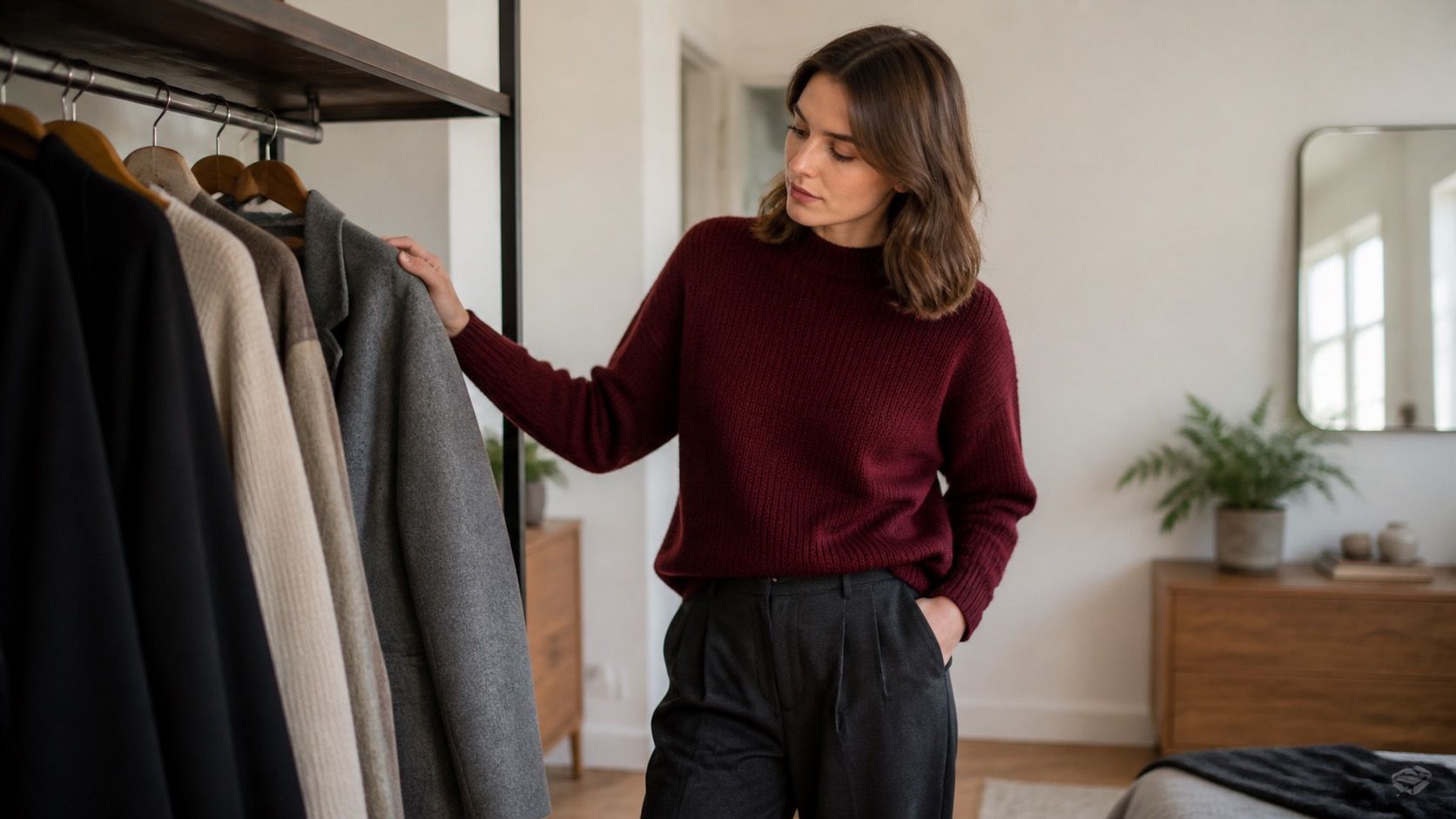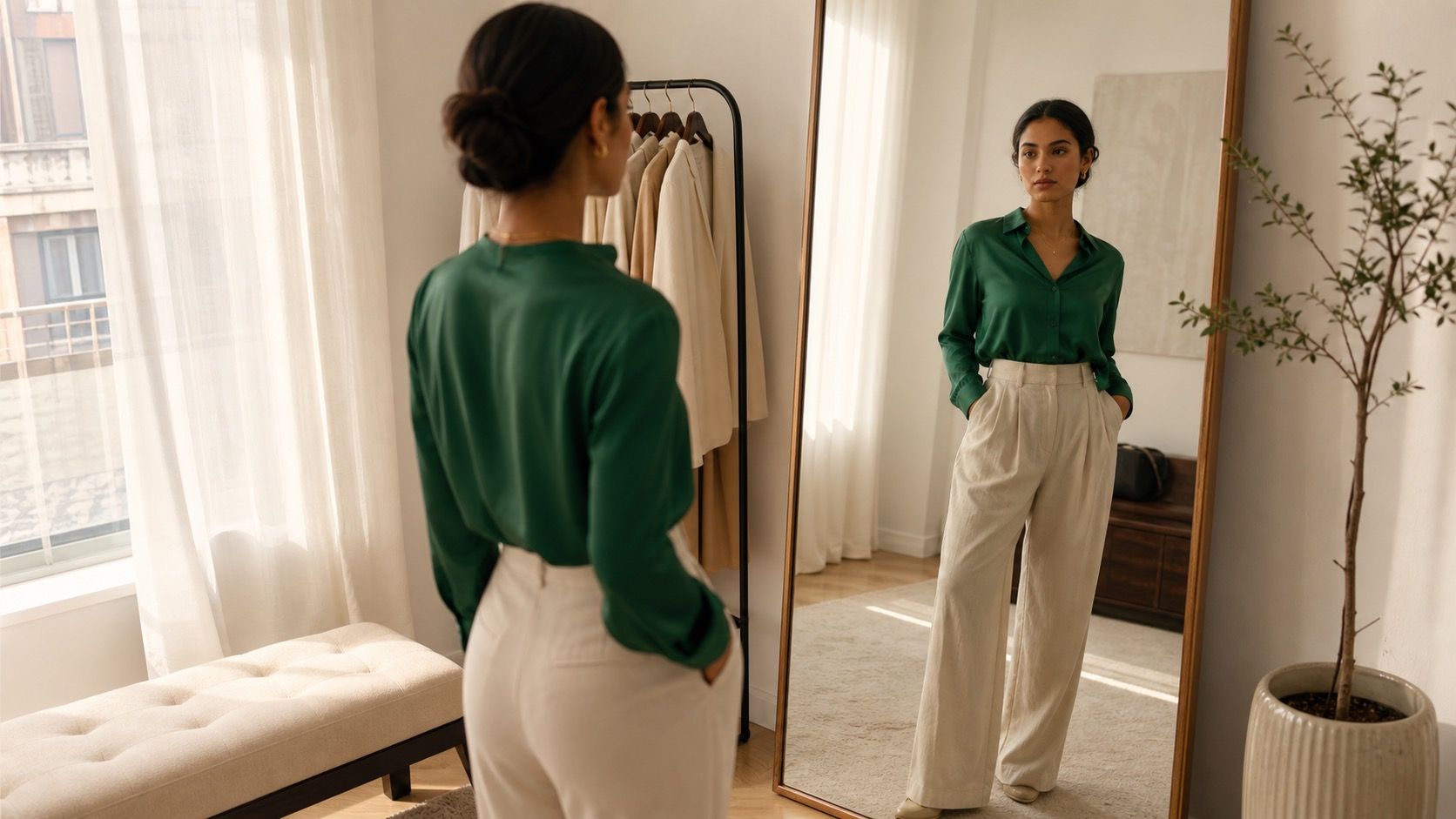
There is no single set of best clothing colors for brown skin, because brown skin includes a wide range of depths and undertones. What tends to work is a way of looking: notice how much contrast your features naturally have, then decide whether you want an outfit to echo it or soften it. A bright marigold dress, a cream shirt, and a cobalt sweater can all look excellent, but they will not create the same effect on every person or in every light.
Read undertone and contrast before buying a color family
Start in daylight with your face free of foundation if possible. Hold a warm gold-toned fabric, a cool blue-toned fabric, and a muted olive or taupe near your jaw. You are looking for the fabric that makes your skin look even and your eyes look more awake. A warm undertone may come alive next to marigold, tomato red, warm ivory, or caramel. A cool undertone may look especially clear next to cobalt, fuchsia, blue-red, and silver-grey. Olive undertones can move between groups, which is why a rigid warm-versus-cool rule often feels unhelpful.
Contrast is separate from undertone. Someone with deep brown skin, dark hair, and dark eyes can often carry a sharp cream-and-black combination beautifully. Someone with medium brown skin and softer features may prefer the gentler contrast of cocoa with sand or petrol blue with denim. Neither approach is more polished. They simply put the visual emphasis in different places.
Try rich shades when you want a clean, defined look
Jewel tones earn their reputation because they have enough depth and saturation to read clearly against many brown skin tones. Emerald, cobalt, sapphire, amethyst, burgundy, and strong turquoise are good candidates, especially for tops and dresses. They do not need to be worn all together. A cobalt shirt with dark straight-leg jeans or an emerald sweater with cream trousers gives the color room to do its work.
Pay attention to fabric finish. A very shiny cobalt satin blouse catches light differently from a matte knit, and can make the same color look much brighter. In a fitting room, take two steps away from the mirror. If you see the blouse before you see your face, try a less saturated version or balance it with a quiet jacket. The goal is definition, not a garment that enters the room before you do.
| Outfit situation | Color direction to test | Useful check |
|---|---|---|
| Top worn close to the face | Emerald, cobalt, berry, marigold | Look for even-looking skin around the mouth and eyes |
| Minimal work wardrobe | Ink navy, espresso, cream, olive, burgundy | Make sure the neutral differs clearly from your skin depth |
| Soft daytime outfit | Lavender, pistachio, coral, powder blue | Choose a version with enough pigment to show up |
| Evening outfit | Plum, bronze, deep teal, black with metallic detail | Check the color under warm indoor light |
Build neutrals around depth, not around habit
Black and white are useful, but they are not the only neutral foundation. Black can be sharp and modern, especially with deep skin tones, yet a wardrobe built only from black sometimes feels flatter than it needs to. Espresso, bitter chocolate, charcoal, deep olive, and ink navy give similar structure with a little more warmth or softness. They also make it easier to wear gold, brass, silver, or colorful accessories without the outfit turning busy.
White comes with the same caveat. Bright optic white creates a crisp contrast; cream, ecru, and warm ivory feel quieter. Try both near your face rather than assuming that one is universally better. If white makes the skin look luminous but cream looks dull, take that seriously. If cream gives more warmth and the hard white feels clinical, that is a useful answer too. Photos taken by a window are more reliable here than a mirror beneath yellow ceiling lights.
Use pastels and brights with the right amount of saturation
Pastels are sometimes described as difficult for brown skin, but the issue is usually not the category. It is a pastel with too much white mixed into it. A barely-there baby pink may look chalky on some complexions; a pink with a little rose or coral in it often has more life. The same applies to pale yellow, mint, and lavender. Look for versions that still have a visible color identity when you place them beside a plain white T-shirt.
Bright colors can be easier because they have clarity. Tangerine, hot pink, electric blue, lime, and sunny yellow are worth trying if you enjoy a stronger look. Keep the silhouette simple when the color is loud: a single-color knit with wide-leg trousers, or a bright skirt with a neutral tee. A patterned top plus several brights plus statement jewelry can work, but it requires intention. On a weekday morning, one vivid piece is usually enough.
Let accessories adjust a color instead of rejecting the whole outfit
Accessories can change the temperature and contrast of an outfit surprisingly quickly. A cool lavender dress that feels a little distant may look more settled with warm gold hoops or a cognac bag. A rust top that feels too warm near the face can be softened with silver earrings, a deep navy jacket, or a scarf that brings in blue. This is why it is worth trying clothing with the pieces you already wear, not only alone in a store cubicle.
Metallic accessories are especially useful for evening clothes. Yellow gold and bronze often echo warmth; silver, pewter, and white gold can sharpen a cooler outfit. There is no rule that limits brown skin to one metal. Compare the metal against your wrist in daylight, then see how it looks with the actual neckline of the garment. A necklace changes the picture more than a ring does because it sits closer to the face.
Make everyday formulas that do not depend on a perfect palette
A flexible wardrobe needs repeatable combinations, not forty special occasion colors. For work, try cream trousers with a cobalt or burgundy top; espresso trousers with a soft coral shirt; or a navy dress with one warm metal accessory. For casual days, a marigold sweatshirt with indigo denim, an olive tee with black jeans, or a lavender knit with chocolate trousers feels considered without becoming formal.
Use your favorite colors as the starting point and adjust the depth around them. If emerald works on you, choose it in a cardigan, blouse, dress, or bag and see where it earns the most wear. If a pale neutral feels invisible, place it on the bottom half and choose a stronger color near your face. Clothing colors for brown skin become easier once you stop looking for permission and start checking what each color actually does in real light.
Test a small edit before you overhaul the wardrobe
Buy or borrow one top in a color family you rarely wear, then photograph it next to a familiar neutral at the same window on two different days. Keep the camera settings plain. Look for clear facial features, not for an airbrushed effect. Skin has natural variation, and a good color will not erase it; it will simply make the overall picture feel more balanced.
Over time, you will notice patterns: perhaps deep teal is easier than forest green, warm cream is better than stark white, or saturated pink beats muted mauve. Those observations are more valuable than a universal chart. The best clothing colors for brown skin are personal, practical, and repeatable in the clothes you actually want to wear.