A capsule wardrobe becomes useful when getting dressed stops feeling like a small daily negotiation with a crowded rail. Skin tone can make that easier, but it should not turn into a list of colors you are supposedly forbidden to wear. The aim is a compact set of clothes that works together, makes your face look awake in ordinary daylight, and still leaves room for the shades you genuinely enjoy.
Use skin tone as a filter, not a prison
Start with the clothes you already reach for on a weekday morning, not a color wheel. Hold a favorite top under a window, then hold it beside your jaw and take one quick photo. The question is simple: does your face look clearer, or does the garment arrive before you do? A color can be technically flattering and still feel wrong if it makes you self-conscious.
Undertone is more useful than a label such as fair, medium, or deep. Warm skin often sits comfortably beside camel, cream, tomato red, olive, and softened gold. Cool skin may prefer charcoal, ink navy, blue red, berry, and icy pastels. Neutral undertones have a wider lane, though even there the depth of a color matters. A pale cool gray can drain one person while a charcoal gray looks excellent.
Try a small comparison instead of declaring a whole palette at once. Put two white T-shirts near your face: optic white and off-white. Then compare black with navy. These pairs reveal more than a quiz result because they show how your own skin, hair, and usual lighting react. Keep the winner; do not throw out the loser if you love it. It may simply work better below the waist or with a stronger lip color.
Choose three base neutrals you will actually wear
The base colors carry the dull but important work: trousers, knitwear, jackets, coats, bags, and shoes. Three is usually enough for a 12-piece capsule. One can be dark, one light, and one middle value. For a cool-leaning wardrobe, that might be navy, stone, and charcoal. For a warm-leaning wardrobe, it could be espresso, cream, and olive. Neither set is a rule; they are just practical starting points.
Before committing, lay the likely pieces on a bed or floor. A navy blazer, black jeans, and tan boots may all be good items but still leave you with three separate wardrobes. Look for overlap. Can the trousers take both your sweaters? Can the coat sit over every top? Does the bag work with the shoes often enough that you will not avoid it? The answer matters more than whether a neutral is fashionable this season.
| Palette direction | Three workable base neutrals | Useful check before buying |
|---|---|---|
| Cool or cool-neutral | Navy, charcoal, soft white | Compare navy and black beside the face; keep the one that leaves the eyes more visible. |
| Warm or warm-neutral | Espresso, cream, olive | Check cream in daylight. Yellowed ivory can look tired beside some warm complexions. |
| Neutral with high contrast | Black, ecru, medium gray | Make sure the gray is not so pale that it disappears against your hair and skin. |
| Neutral with low contrast | Mushroom, soft navy, cocoa | Mix textures such as denim, wool, and leather so similar values do not look flat. |
Do not buy all three neutrals in equal amounts. Most people have a real-life default, such as dark denim and navy, or cream trousers and brown leather. Let that default take up more space. A capsule built around a fantasy version of your life has a short life in the closet.
Add colors that create variety without breaking the capsule
Once the base is steady, choose two or three accent colors that can meet at least two neutrals. Picture them in the places you actually go: a meeting room with harsh overhead light, a grocery run in a puffer jacket, dinner where the coat stays on the chair. A bright cobalt sweater may be perfect with charcoal and navy. A rust blouse can lift cream and espresso. If an accent only works with one special skirt, it is a separate hobby, not part of the capsule.
Value matters as much as hue. If your hair and skin create gentle contrast, a collection of black, optic white, and saturated fuchsia may wear you rather than support you. Try dusty rose, muted teal, soft plum, or medium blue instead. If you have darker hair or stronger facial contrast, pale washed colors can look unfinished unless you add a darker shoe, jacket, or necklace near the face.
There is no prize for picking the most flattering shade of every color family. Keep one color that is a little unreasonable but makes you happy. The sensible trick is to contain it: a scarf, shirt, small bag, or socks rather than the coat you wear four days a week. This keeps the capsule calm without making it bland.
Plan layers, shoes, and accessories before calling it complete
Many capsule wardrobe color palettes look coherent in a neat flat lay and fall apart at the front door. Outerwear covers a large percentage of an outfit for months at a time, so its color deserves more thought than a single blouse. Put your possible coat or jacket over every top. A warm camel coat can fight with cool gray and icy pink; a navy coat usually handles both cool brights and softer neutrals, but may feel severe with a very earthy wardrobe.
Shoes also set the temperature of the outfit. Black shoes make a strong visual stop, especially with bare ankles or pale trousers. Dark brown has less edge with olive, denim, cream, and rust. Light sneakers can be useful, but bright white trainers are not the same as soft white leather. If stark white makes your complexion look gray, an ecru or taupe sneaker often solves the problem quietly.
Use jewelry and bags as bridge pieces. Silver can cool down a warm red top; brass can make an olive sweater look intentional next to cream. This is not about matching metal to undertone with military precision. It is about noticing whether the small hard surfaces of a watch, buckle, or earrings pull an outfit toward the colors you want near your face.
Test a 12-piece capsule through a normal laundry cycle
Do not build the full capsule in one shopping trip. Pick twelve core clothes excluding underwear, gym kit, and one or two special-occasion items. Wear them for two weeks, including the day when you spill coffee, the day the weather changes at lunch, and the evening when you do not have time to plan. Repetition is useful evidence. If you keep reaching for the same navy knit, you need another supporting piece, not a new statement color.
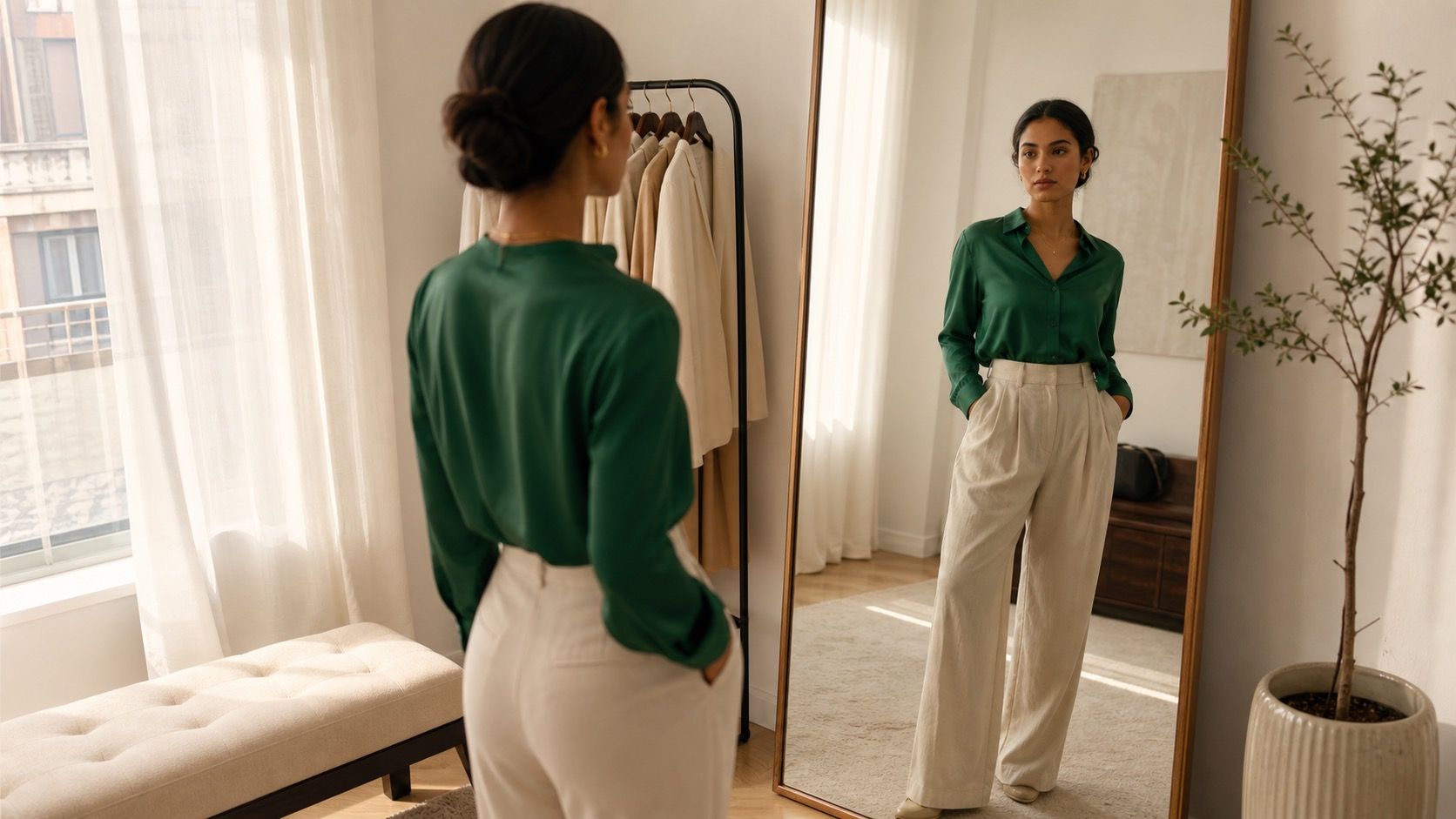
Take mirror photos when an outfit feels easy and when it feels slightly off. After ten or twelve looks, patterns appear. You may find that cream close to the face is better than white, that the black blazer only works with a berry top, or that your favorite green needs brown shoes rather than black. This small audit prevents a budget leak into clothes that pass a fitting-room test but never get worn.
Keep the test kind. A capsule is meant to reduce decisions, not to prove that you can survive with very little. If you wash frequently, own a messy dog, commute by bike, or need more layers in winter, twelve pieces may be too few. Add duplicates where your life demands them. Practical repetition beats an impressive count.
Refresh the palette when your preferences change
Your coloring is not the only moving part. Hair can become lighter, a tan can disappear, a new office can change what you wear, and a color you once avoided can suddenly feel like home. Review the capsule at the end of a season with the same daylight test. Separate the pieces that are worn out from those that are simply no longer your taste.
Replace one missing link at a time. If a dark green cardigan used to join your cream trousers, brown boots, and navy jeans, find a replacement that performs that job before adding another exciting color. This keeps a capsule wardrobe around your skin tone flexible. It also means the answer to what colors look good on me is allowed to change with your clothes, your hair, and your actual life.