If you have ever searched for a what color clothes look best on me quiz, you probably wanted a quick answer before buying something expensive. A better color test for clothes takes twenty quiet minutes at home. It will not assign you a permanent identity, but it can show which shades make your face look rested and which ones ask for more makeup than you feel like wearing.
Set up a color test that is worth trusting
Do the first round in daylight, ideally near a north-facing window or outside in open shade. Direct sun creates hard shadows; a yellow ceiling bulb makes cream look flattering and cool pink look strange. Turn off beauty filters, night mode, and any overhead lamp. The point is not to look glamorous. It is to see small changes in your skin clearly.
Start with a bare face, or at least the same minimal makeup for every comparison. Lipstick and bronzer can be useful later, but they are noisy at the beginning. Pull your hair away from your face and wear a low, neutral neckline. If your usual hairstyle frames your face strongly, repeat the test once with it down; hair color is part of the picture.
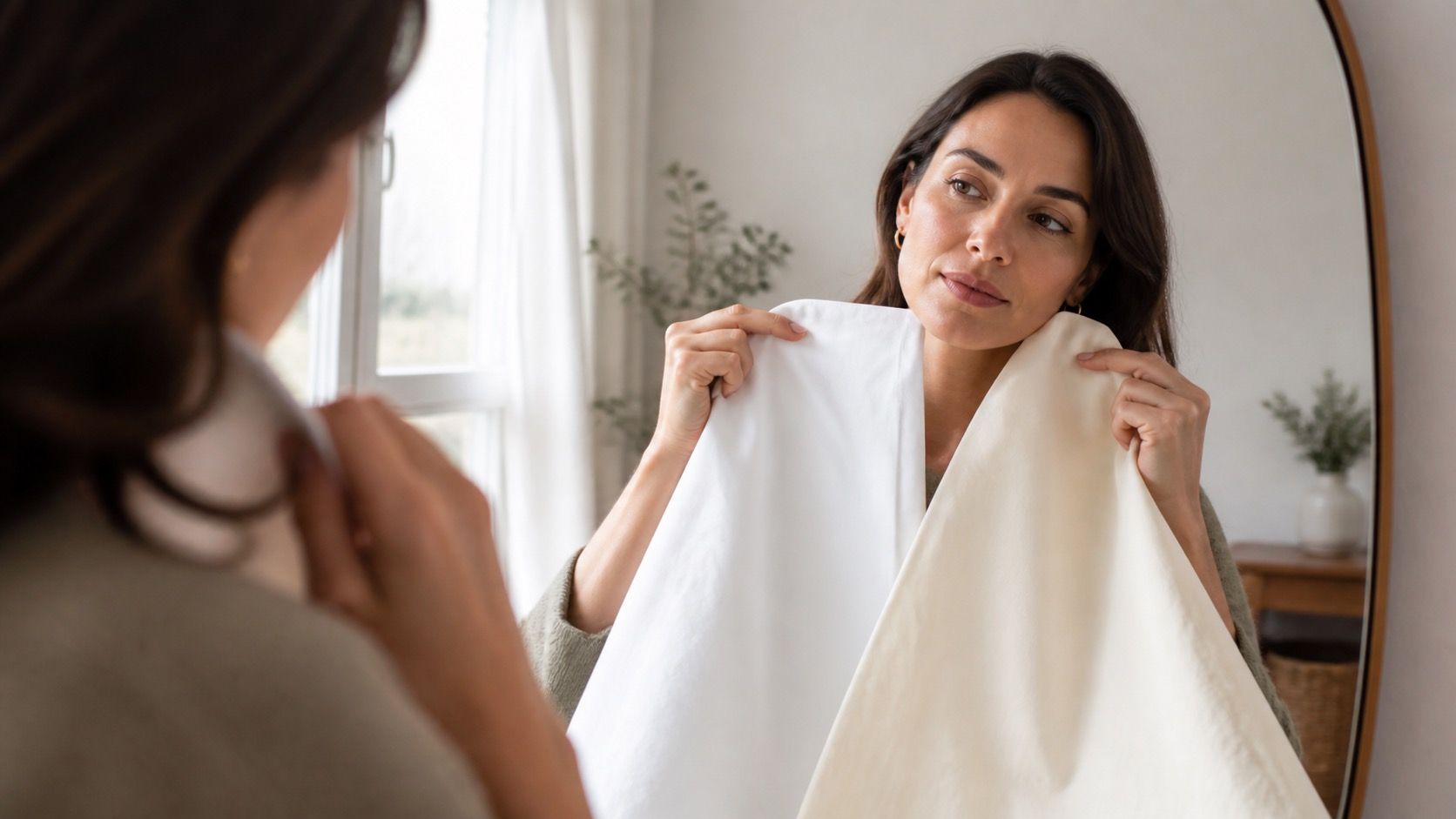
Use real fabric when possible. A T-shirt, towel, pillowcase, scarf, or folded sheet is better than holding a tiny online swatch on a bright screen. Place the fabric under your chin rather than over your shoulder. You are looking at the area around your eyes, cheeks, jaw, and mouth, where an unhelpful shade is harder to hide.
Compare white, cream, and neutral gray first
White versus cream is a surprisingly useful first split. Put a clear white fabric under your chin, look for a minute, then switch to cream. Do not ask which color you prefer in theory. Ask whether your eyes look clearer, whether redness becomes more obvious, and whether the line of your jaw looks sharp or a bit blurred.
Some people look fresh in bright white and slightly tired in cream. Others find that optic white pulls every shadow forward while ivory makes their skin look more even. Neither result tells you that you must never wear the other shade. It gives you a practical clue for shirts, coats, and scarves, which sit close to the face.
Add a medium neutral gray. Gray is useful because it has little emotional pull: it does not flatter by looking sunny or dramatic. If gray makes your face disappear, you may need more depth or warmth in your clothing. If it makes the skin look calm, it may be one of the easiest neutrals in your wardrobe.
| Fabric comparison | What to notice | How to use the result |
|---|---|---|
| White vs. cream | eye area, redness, teeth, jawline | Choose the better one for shirts and scarves |
| Cool gray vs. warm taupe | does the skin turn sallow or clear? | Pick a coat and trouser neutral family |
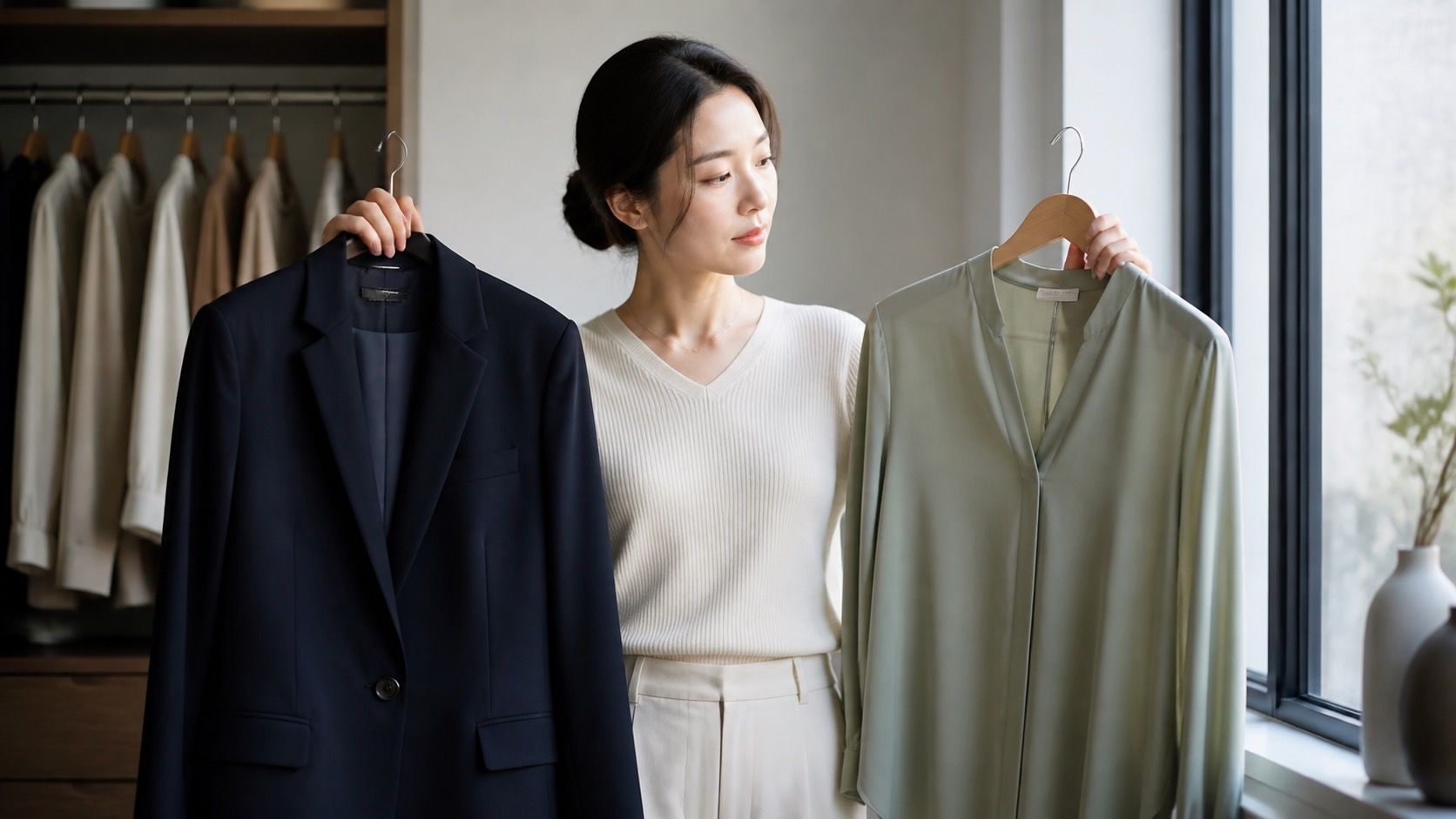
| Soft navy vs. black | contrast around the eyes and brows | Decide whether black needs a lighter neckline |
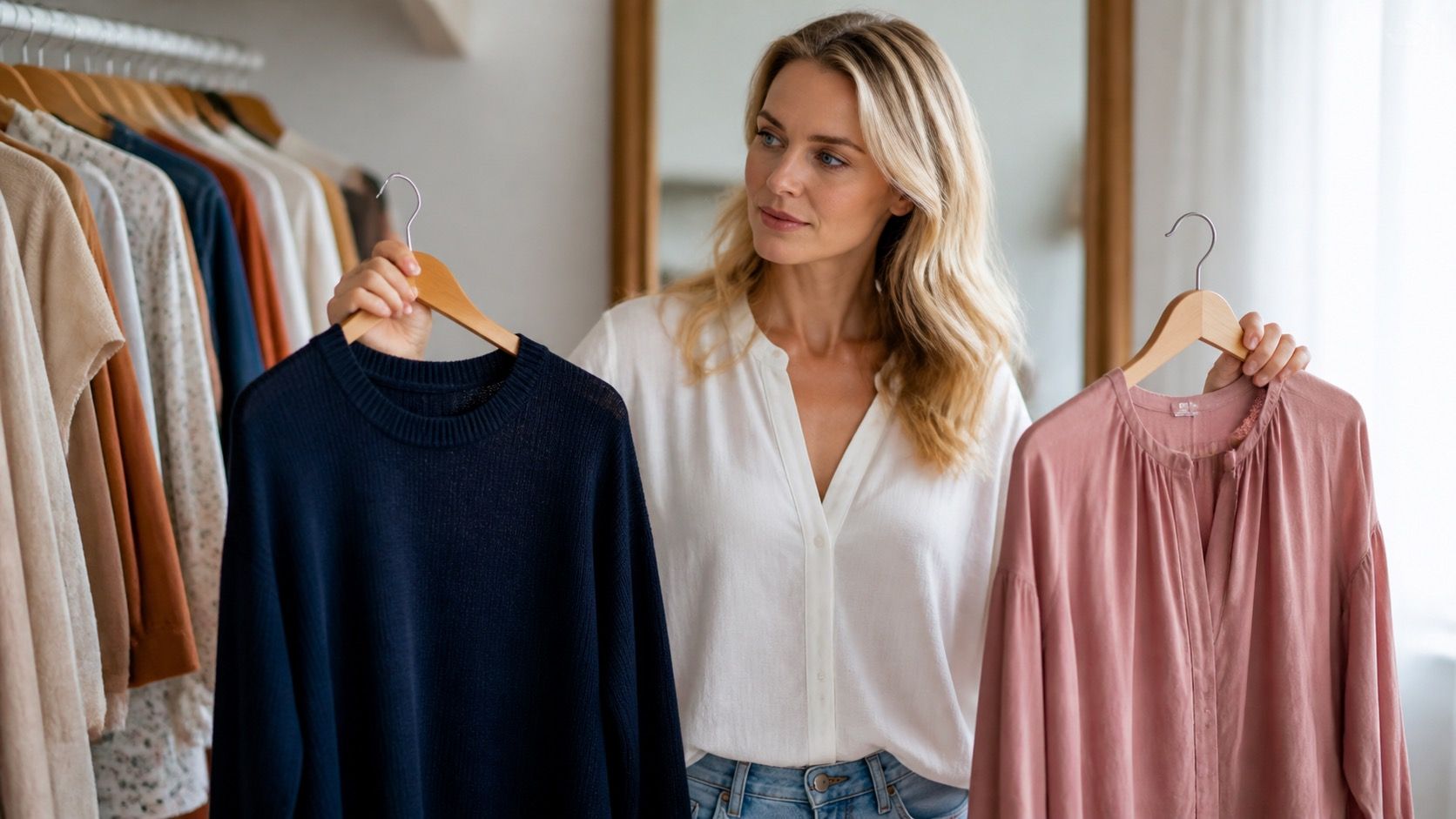
| Muted rose vs. bright coral | cheek color and overall definition | Separate softness from brightness preferences |
Test warmth, coolness, and intensity separately
Undertone is only one variable. Test a warm and cool version of the same color: brick red against berry red, olive against pine green, peach against rose pink. Keep the value similar so that you are testing temperature rather than comparing a pale top with a dark one. A phone timer helps; after a few minutes your eyes adapt and both fabrics begin to look normal.
Next, test intensity. Put a muted denim blue next to a bright electric blue, or dusty mauve next to fuchsia. Some faces hold clear, saturated color easily; others look more balanced beside softened shades. This is why a broad answer like “warm colors suit you” is not enough. You may like warmth but need it faded, or like cool colors but need a little depth.
Face contrast matters as well. Notice the difference between your skin, brows, hair, and eyes. A person with pale skin and light hair can look polished in a soft blue-gray outfit that would seem washed out on someone with dark hair and strong brows. The test is about matching the visual volume around your face, not about obeying a label.
Use photos without letting the camera decide
Take comparison photos from the same spot, at the same time, with the phone at eye level. Hold each fabric in the same place and use the rear camera if someone can help; front cameras often smooth or shift color. Do not compare one photo made by a window with another made beside a warm lamp. That is a lighting test, not a color test.
Look at the photos later, preferably after a break. The useful sign is usually quiet: your eye lands on the person before it lands on the fabric. In an unhelpful photo, the color seems to arrive first, while the face looks patchy, flat, or a little drained. Avoid judging by skin color alone. The area around the eyes and the clarity of the lip line are often more revealing.
Phone cameras do make mistakes with deep red, neon shades, and very dark navy. If the camera result disagrees with the mirror, trust neither one blindly. Repeat in daylight on another day. A color result that only works under a particular lamp is not much use for everyday clothes.
Turn the test into colors you can wear this week
Translate your notes into small choices. If cream beat white, try an ivory tee under your navy blazer rather than replacing every white shirt. If soft blues worked better than bright ones, use slate, faded denim, or smoky teal in a knit. If rust made your eyes look lively but felt too loud as a sweater, test it in a bag or shoe.
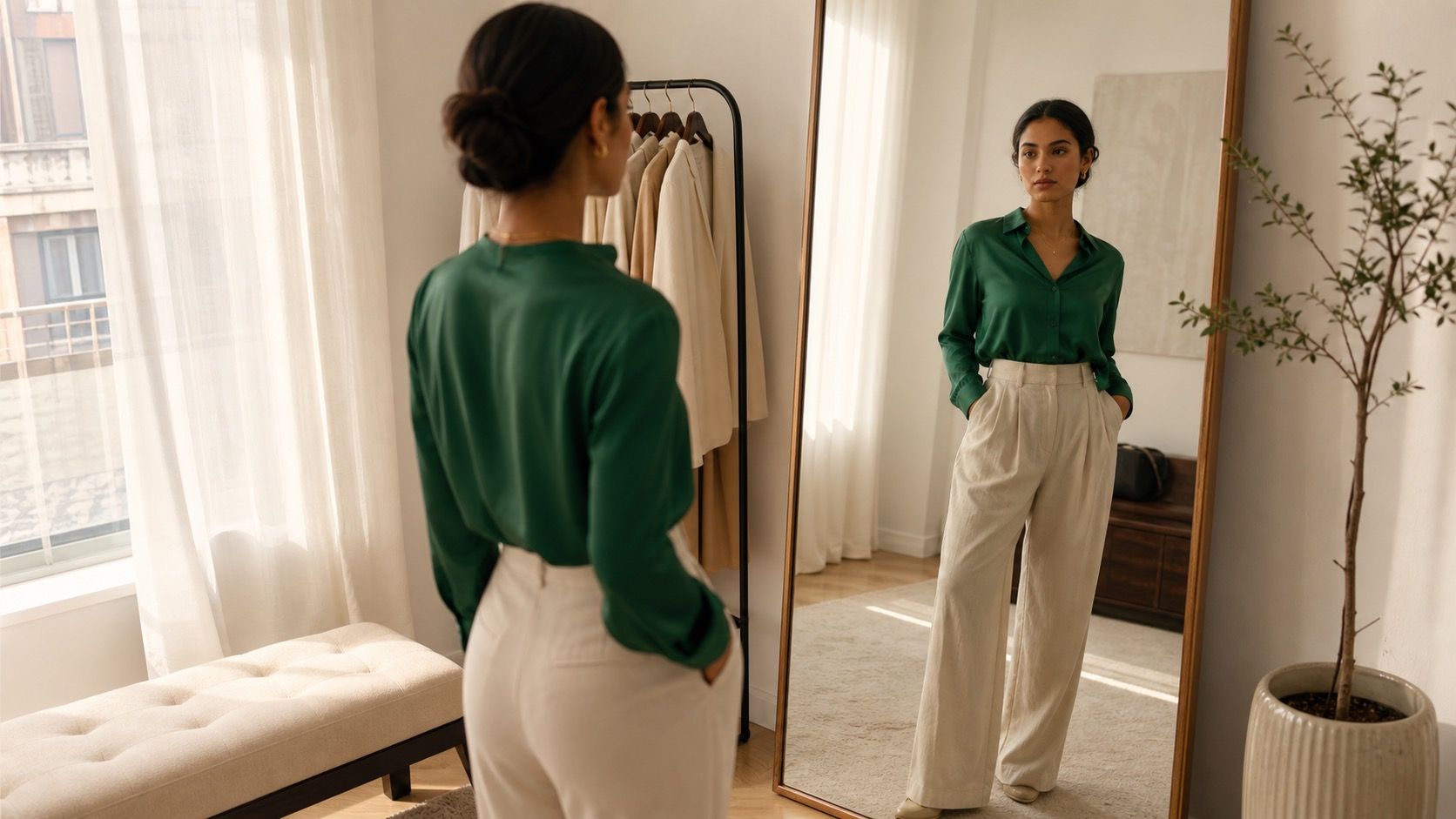
Build around two dependable neutrals and three colors near your face. For example, someone who liked ivory, soft navy, muted rose, moss, and cocoa already has many outfits available: navy trousers with ivory knitwear, cocoa jeans with a rose shirt, or moss under a cream jacket. The result should feel like a useful shopping filter, not a uniform.
Keep the pieces you love in the test even if they lose. A black dress may be perfect for an evening because its shape and mood matter more than whether black is your ideal neutral. The point is to know when you are choosing an effect and when you are choosing the easiest possible day.
Why a closet test beats an online quiz
A free what colour clothes suit me quiz can be a fun starting point, but it has no idea how your actual navy looks, how dark your hair is now, or what happens to your complexion in winter. Most quizzes flatten a face into a few questions. They cannot see the difference between bright white and soft white, or between olive that leans yellow and olive that leans gray.
Your closet supplies a better sample because the fabrics, necklines, and colors are real. Pick three outfits you felt good in and three that seemed wrong despite fitting well. Compare them by temperature, depth, contrast, and how close the color sits to your face. Patterns emerge quickly, and they are more useful than a single quiz result.
Repeat the test when your hair color changes, you start wearing glasses, or the season changes the light you live in. Treat it as an observation, not a diagnosis. The best result is simply a smaller set of colors that make getting dressed feel less like a gamble.