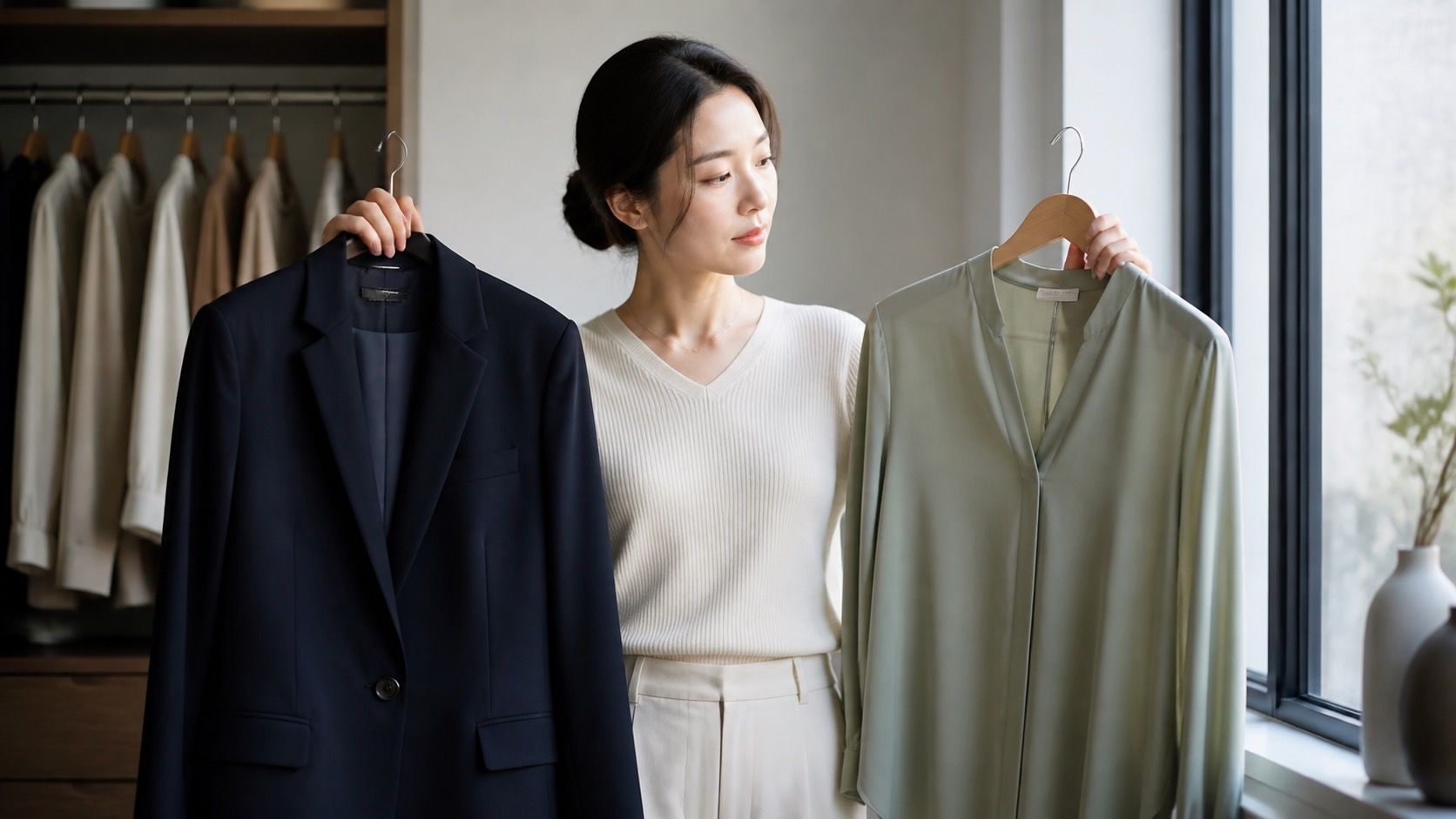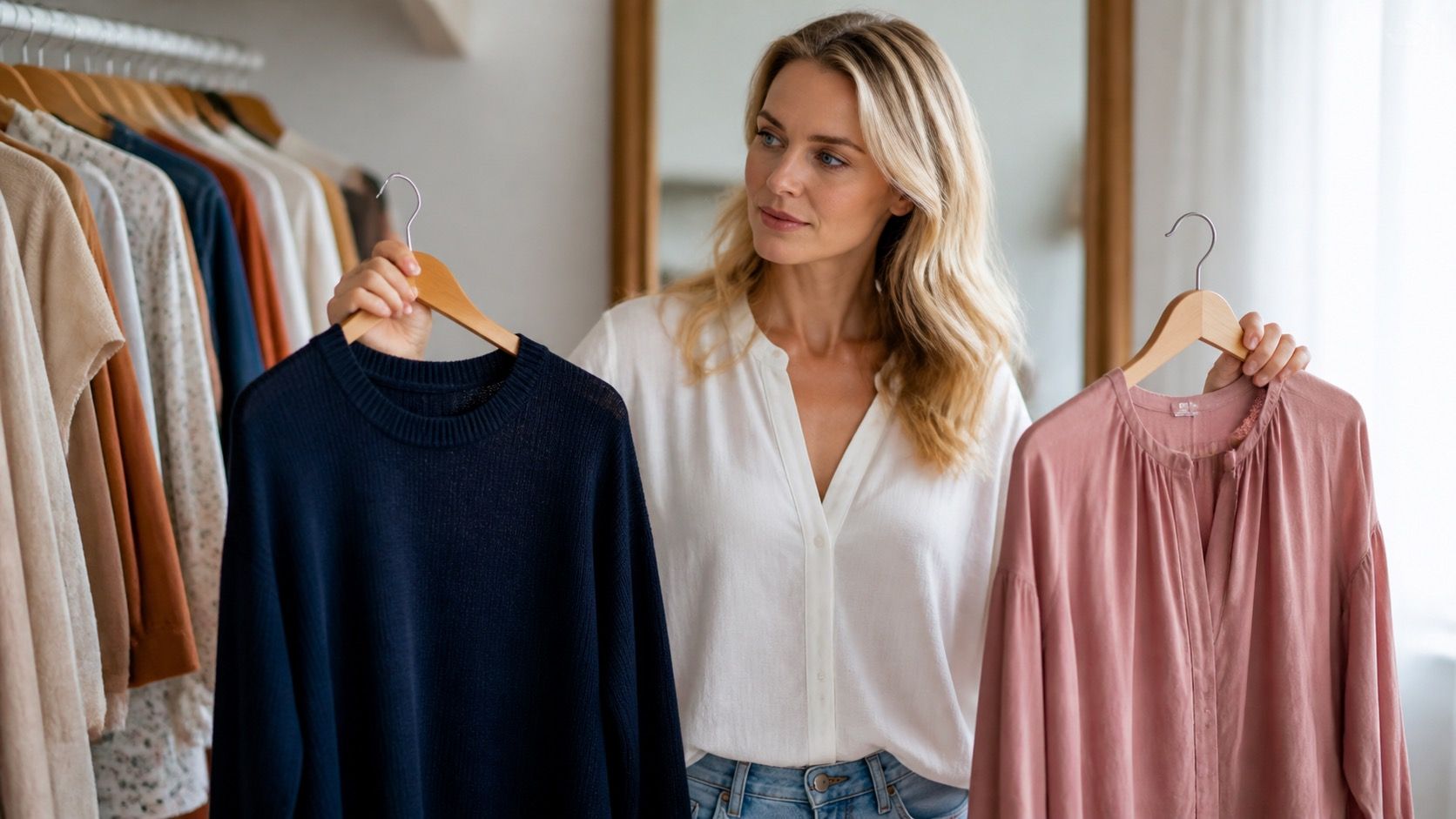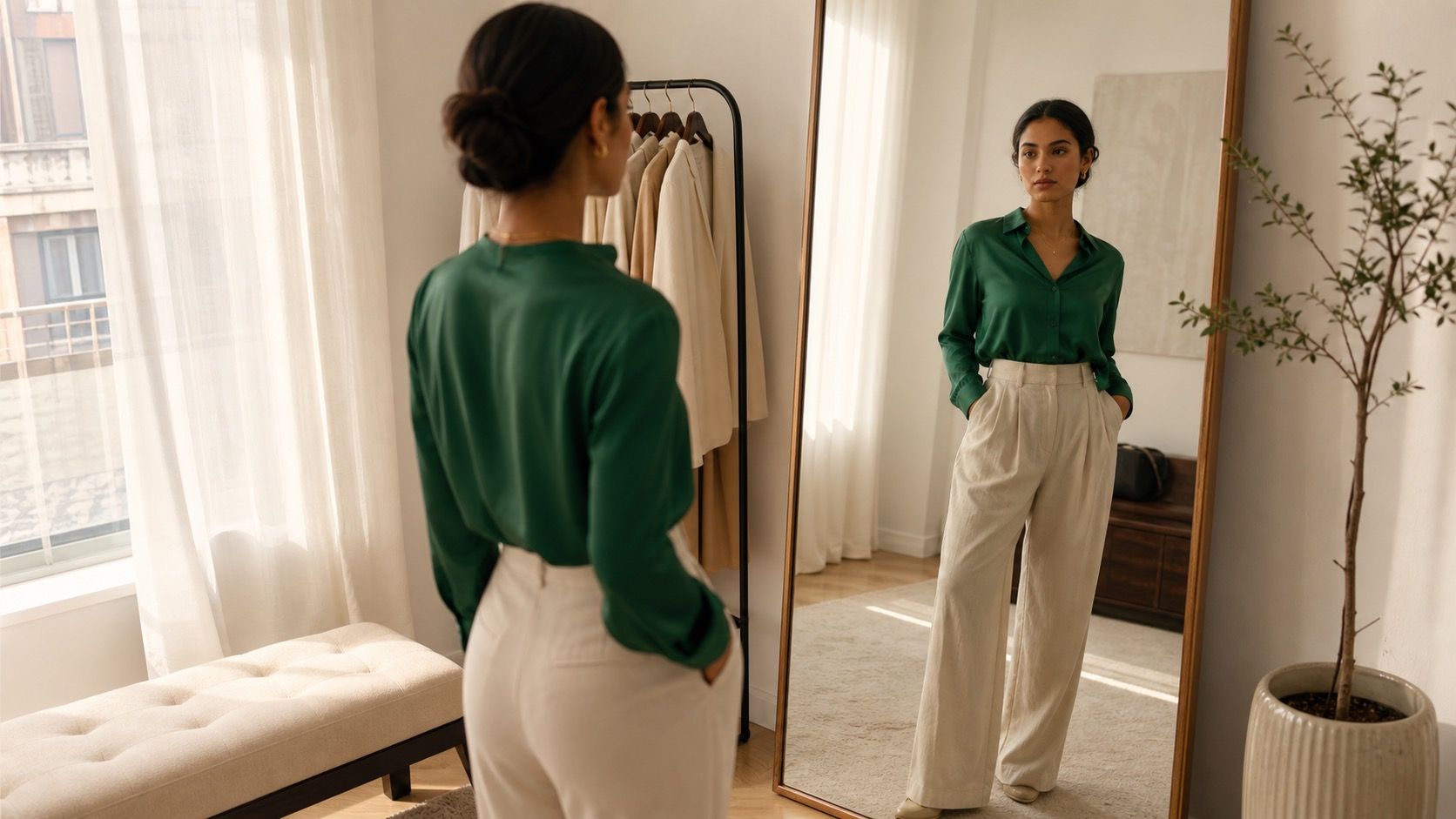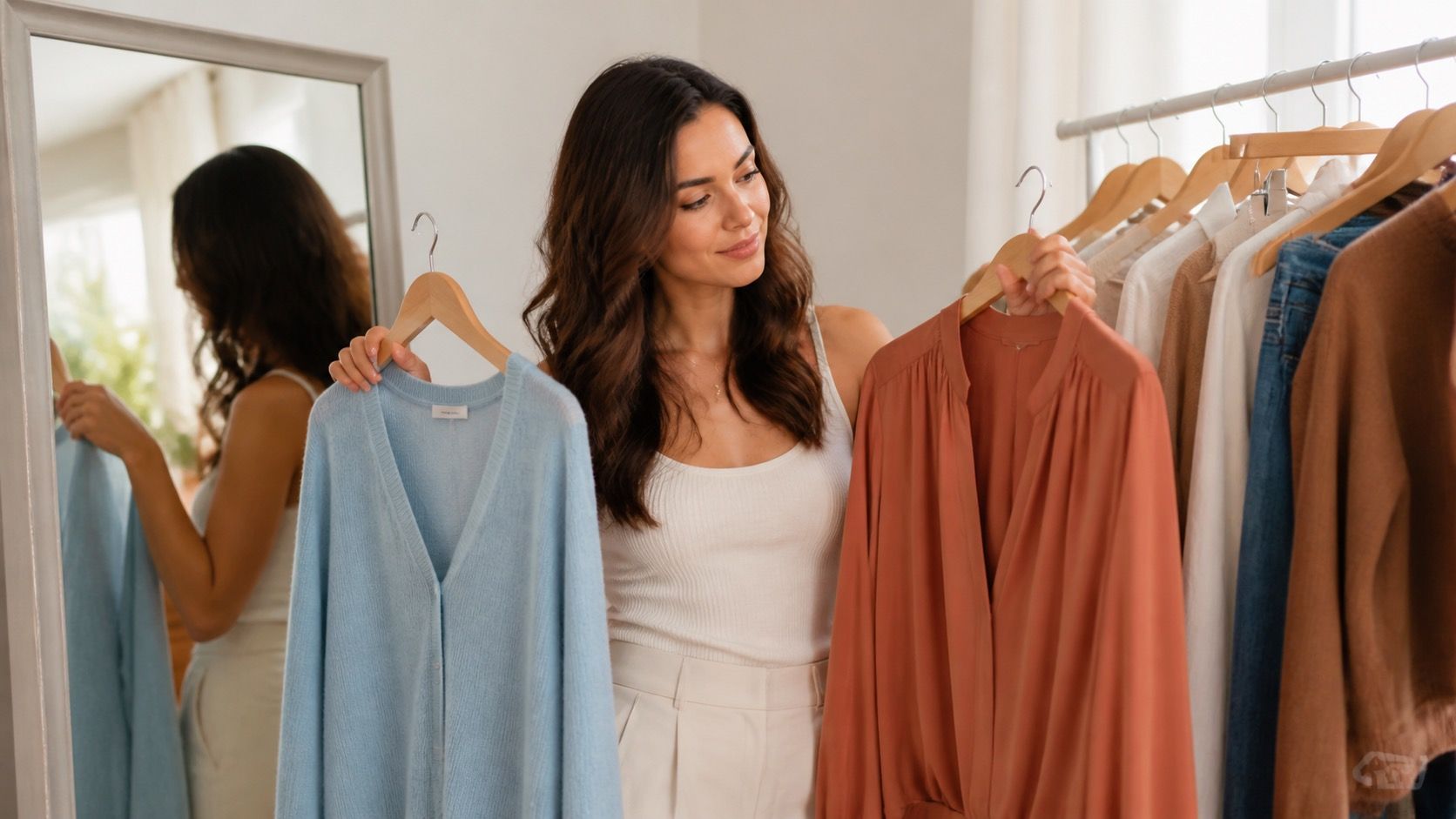
Hair color changes the frame around your face, so it can make a familiar sweater look sharper, softer, or oddly disconnected. That does not mean blondes belong in pastels and redheads must wear green. The useful part is noticing contrast and saturation, then choosing clothes that let your features show up before the outfit does.
Read hair color as a contrast clue, not the whole answer
Stand a few steps back from a mirror in daylight. Do you see strong difference between your hair, skin, brows, and eyes, or does everything blend gently? This is the contrast level an outfit needs to respect. Dark brown hair against light skin can carry black, crisp white, and deep jewel tones with little effort. Ash blonde hair with fair skin often looks more settled in softer edges: dove gray, faded denim, rose, or muted navy.
Skin undertone still gets a vote. A warm blonde can look tired in a cool pale lilac even though both are light. A cool brunette may find camel too yellow near the face but look great in deep chocolate below the waist. When you match clothes to hair color, use a neckline test: hold the fabric beside your face, then step away from the mirror. If the first thing you notice is the color rather than your eyes, adjust the shade or add a bridge piece.
It helps to separate hair color from hair texture. A dark glossy bob can make a clean, high-contrast outfit look deliberate. The same black hair in loose waves may work better with charcoal, denim, or a textured knit than head-to-toe black. Clothing reacts to the full picture, not a swatch labelled brunette.
Outfit colors for blonde and gray hair
The phrase outfit colors for blonde hair covers wildly different people. Platinum, honey, dark blonde, and ash blonde have different temperatures and different contrast with the face. Rather than buying a row of powder-blue tops, compare a clear medium blue, a dusty blue, and navy. The one that gives your face definition without making it look pink or gray is the useful blue for you.
Cool or ash blonde hair often works well with soft navy, charcoal, raspberry, denim blue, cool pink, and silver-toned accessories. Honey blonde and warm blonde hair can be lovely with cream, olive, terracotta, warm teal, coral, and softer browns. Strong yellow, close to warm blonde hair, can make the overall effect feel too matched. Put it on the lower half or break it with a white shirt.
| Hair situation | Colors worth testing near the face | Common snag |
|---|---|---|
| Platinum or light ash blonde | Charcoal, clear blue, raspberry, cool pink | Beige can erase the contrast unless it is quite cool or paired with a darker layer. |
| Honey or golden blonde | Cream, olive, warm teal, tomato red | Very icy pastels may clash with the warmth in the hair. |
| Silver or gray hair | Ink navy, berry, emerald, soft white | Muddy taupe can make silver hair look dull, particularly in indoor light. |
| Dark blonde or bronde | Denim, forest green, rose, medium brown | All-light outfits can lack shape; add one deeper shoe or jacket. |
Gray hair often looks excellent with clearer colors because the silver provides a neutral frame. That does not require bright clothing. A dark navy coat, white shirt, and berry scarf has enough contrast for most days. If black feels harsh, charcoal gives a similar structure with less severity. Avoid treating gray hair as a reason to abandon warm colors; a warm red or olive may work beautifully when your skin undertone supports it.
Outfit colors for brunette and black hair
Brunette hair gives an outfit a built-in dark note, especially when it is worn down around the shoulders. That is why a navy sweater, dark denim, and burgundy shoe can look finished without much effort. But depth is not a free pass for every saturated color. A very dark brunette with soft, low-contrast skin may feel overwhelmed by black-and-white stripes even though the hair itself is dark.
For medium and dark brown hair, test navy, forest green, burgundy, cobalt, cream, dusty pink, and rich brown. Black hair can support black, white, cobalt, saturated red, emerald, and cool gray, although warm complexions may prefer espresso or deep olive instead of blue-black. Place one color near your face and keep the rest simpler. A cobalt knit with charcoal trousers usually looks more relaxed than cobalt trousers, cobalt shoes, and a matching bag.
Watch the neckline. A black turtleneck can merge with black hair and make the face seem like a separate floating area, particularly in photographs. A scoop neck, a white collar, a necklace, or an open jacket creates a small pause between hair and fabric. This is a practical reason to vary your necklines, not a command to avoid black.
Outfit colors for red and auburn hair
Red and auburn hair already carries visible warmth, so clothing needs enough distance from it. Deep teal, moss, cream, navy, warm gray, soft blue, plum, and chocolate are reliable places to start. Green is often suggested because it sits opposite red, but a bright St Patrick's Day green can make the pairing feel like a costume. Look for forest, moss, eucalyptus, or a deep blue-green instead.
Red clothing is possible, but matching it too closely to the hair can become busy. Choose a red that is clearly deeper, cooler, or warmer than the hair. For example, an auburn-haired person might wear a wine-colored blouse with dark denim, while a copper-haired person may prefer tomato red as a bag or shoe. Stand by a window for this decision. Store lighting makes neighboring reds seem friendlier than they are.
Jewelry can settle the temperature. Gold often echoes warm copper tones, while silver can make a cool auburn shade look sharper. Neither metal is assigned to one hair color. Test your earrings with the top you wear most often, because that is where the interaction is most obvious.
What changes when your hair is dyed
Dyed hair complicates the old rules in a useful way. Natural dark roots, a warm blonde balayage, or a vivid copper gloss can create more than one color cue around the face. Base the outfit on the color you see at the front hairline and around the cheeks, not the shade shown in a salon photo taken under ring lights.
After a major change, do not rebuild the closet immediately. Keep a small rail of tops in white, cream, navy, charcoal, soft blue, olive, and one strong color. Try them over a few weeks as the dye settles and you see it in rain, daylight, and evening restaurants. Some color services fade warmer or cooler than expected. A sweater that looked wrong on day two may become fine a month later.
For fashion colors such as pink, blue, or violet, use neutral clothing as the stabilizer. Black, charcoal, denim, cream, and muted brown leave the hair as the playful part. Repeating the exact hair color in shoes and bag is usually where the costume feeling starts.
Use accessories when a color almost works
An almost-right color does not need to leave your wardrobe. If a pale beige blouse drains you, add a navy cardigan or stronger earrings near the face. If a bright red sweater feels loud against blonde hair, wear it with dark denim and a softer scarf. A small change in contrast can do more than replacing the garment.
Accessories also let you test best clothing colors for hair color without buying a new coat. Try a scarf, cap, necklace, or lip color in the shade first. Take a photo outdoors and one under your usual indoor lights. If the color works in both, it has earned a bigger role. This slower method keeps the result personal: you get clothes that relate to your hair without turning every outfit into a color-theory demonstration.