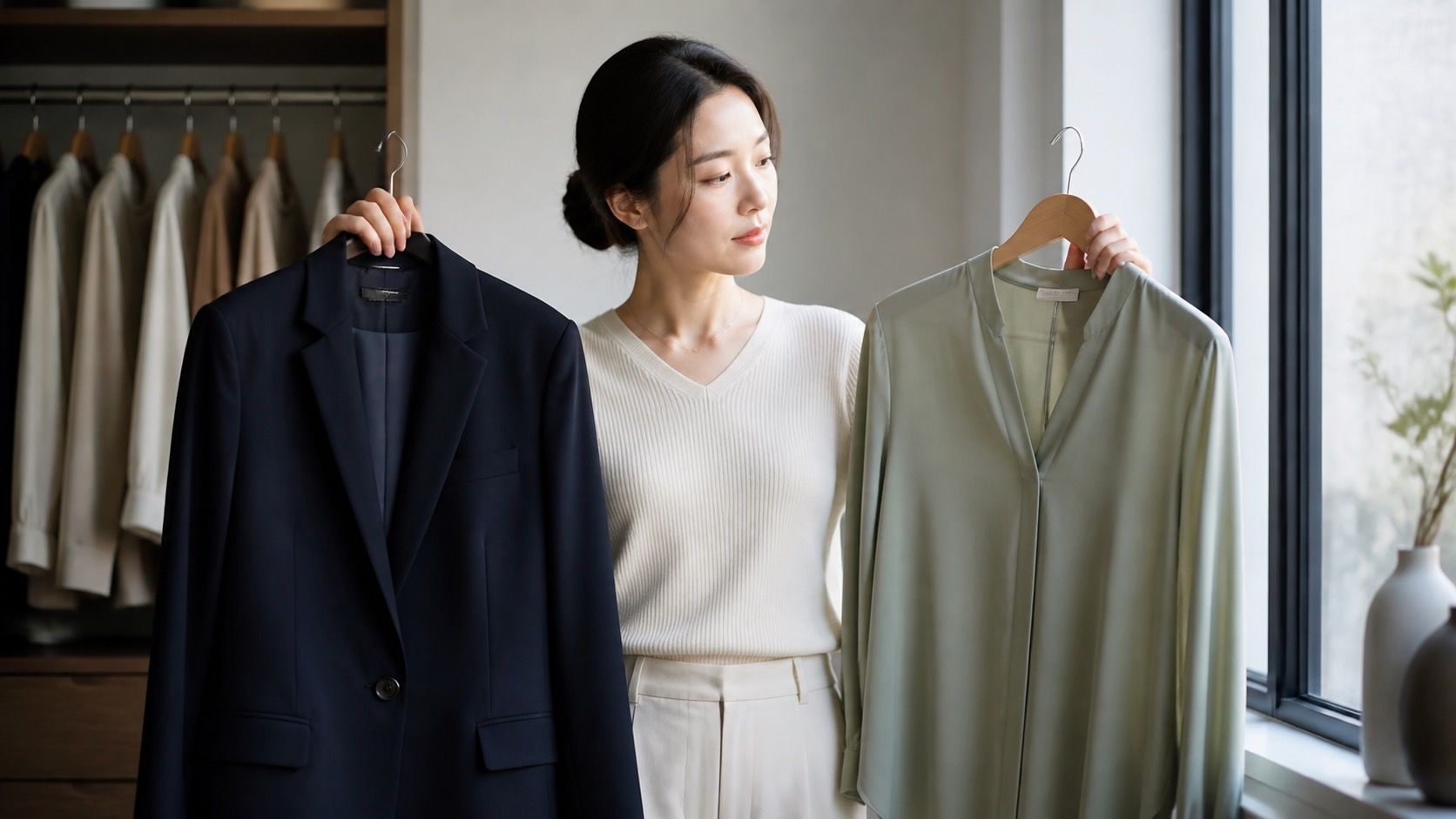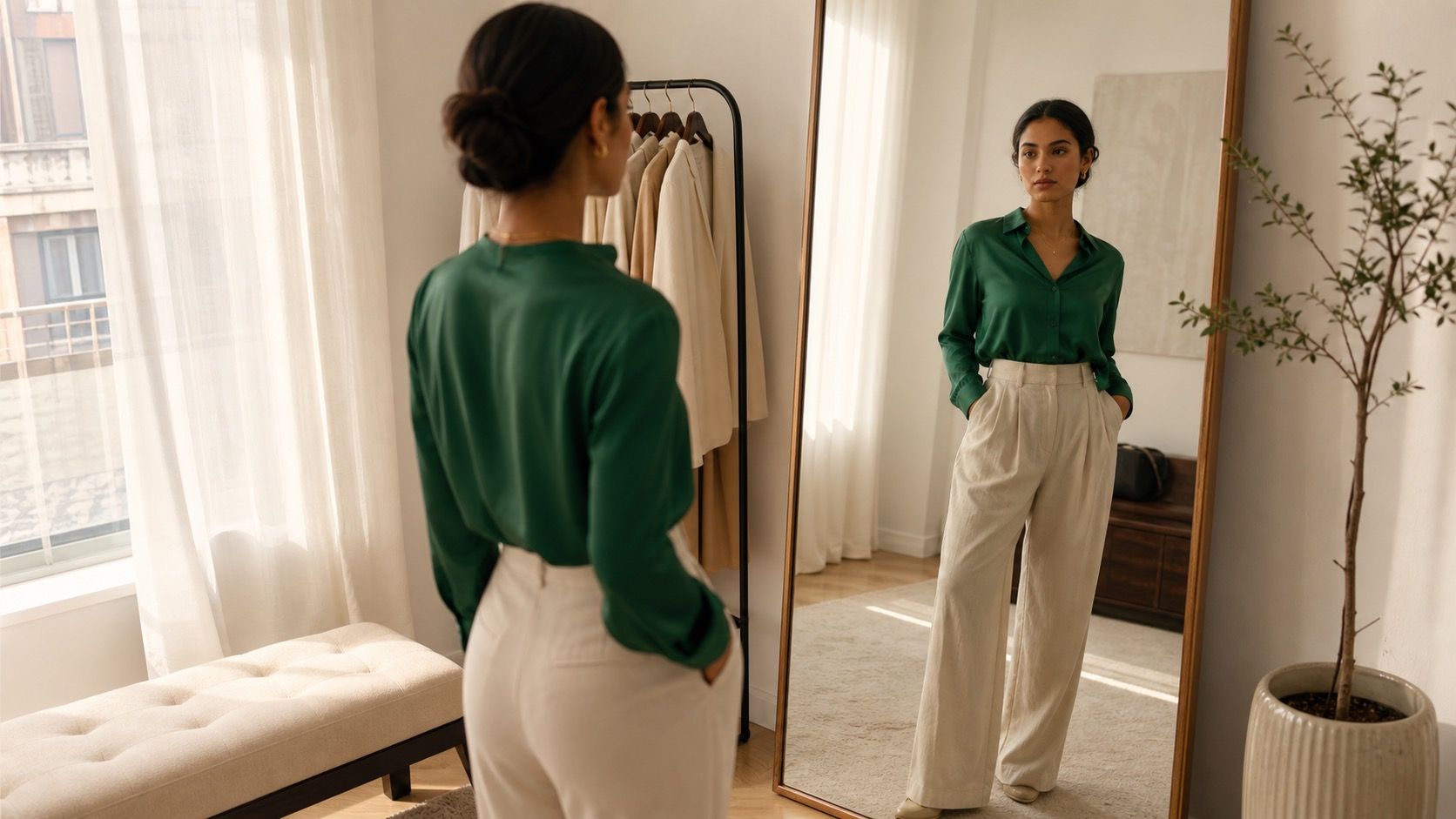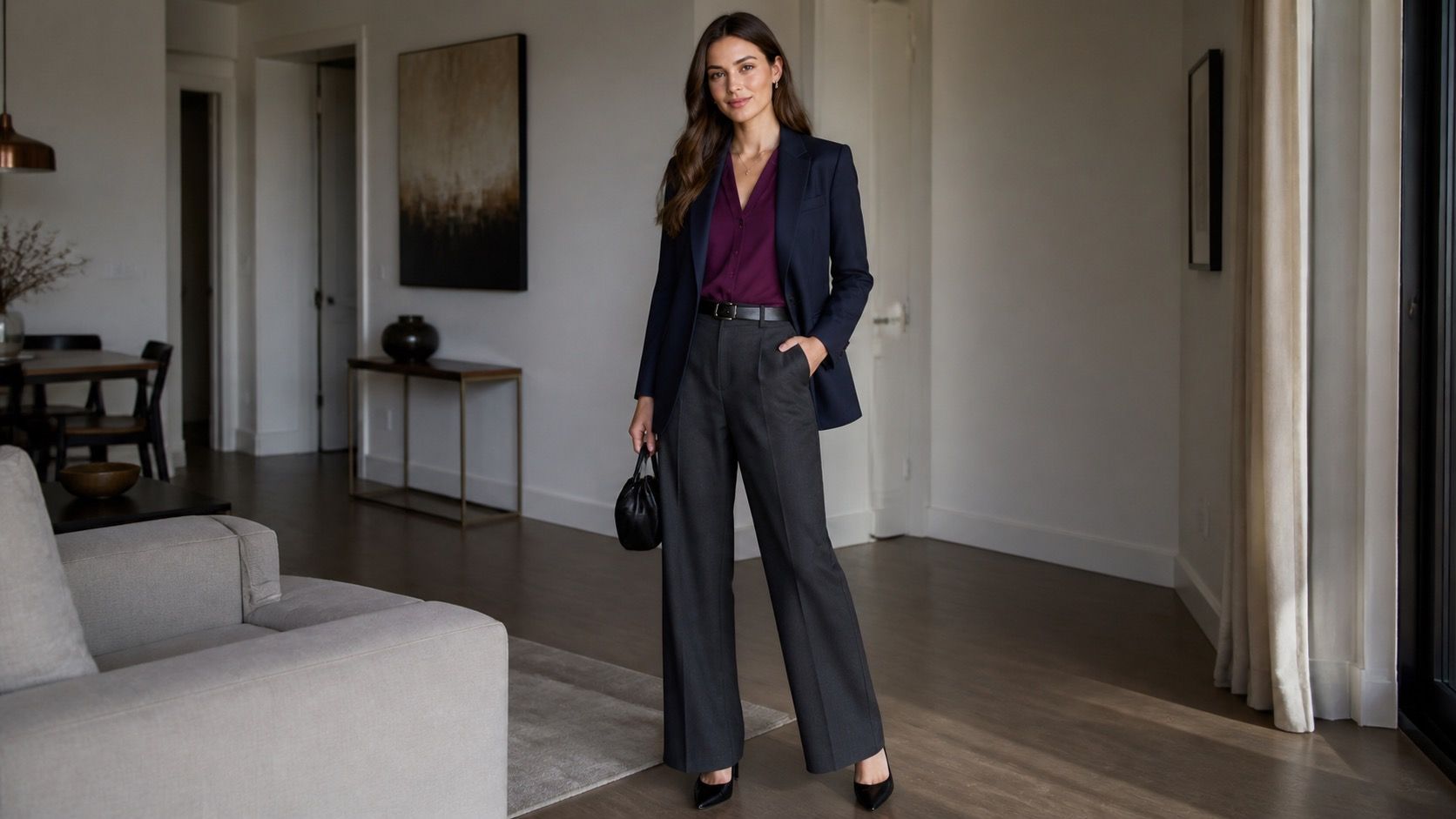
Soft Winter can be confusing because the palette sits between two tempting habits: Winter's appetite for cool depth and a softer preference for blended color. If black and bright jewel tones seem almost right but a little loud, the answer is often not to abandon them. It is to lower the contrast, soften the fabric, and give the face one clear point of color instead of five.
Find the softer side before you build an outfit
Soft Winter outfit colors usually look cool, medium-to-deep, and slightly smoked rather than dusty in the Summer sense. Soft navy, charcoal, pine, smoky berry, blue-gray, and cool plum are useful reference points. They hold enough depth for a dark-haired or high-contrast look, but they do not insist on the sharp black-and-white effect associated with a more vivid Winter wardrobe. The result should feel composed, not faded.
Start by comparing two versions of the same idea. Put a clean cobalt top next to a smoky navy one, or a hot pink scarf next to a muted berry scarf. The brighter item may be exciting on the hanger but take over in a mirror. The softer one should still give the face shape. If it makes you look washed out, go a little deeper rather than immediately going clearer. Depth and brightness are separate levers, and Soft Winter often needs the first more than the second.
Choose neutrals that keep the face awake
Charcoal is the workhorse here. It gives much of black's structure while leaving room for blue-gray, berry, and pine near the face. Soft navy, cool espresso, graphite, and dark denim are equally practical. Build a week around two of them, then use a lighter cool gray or soft white as relief. A wardrobe made only of middle gray can look sensible but sleepy; a single pale blue shirt or icy-gray tee fixes that quickly.
Black is not banned, though it deserves a fitting-room check. A black blazer over a smoky berry knit may look polished because the berry softens the edge. The same blazer over a stark white tee can make the whole outfit feel louder than intended. If black feels severe, move it farther from the face: boots, trousers, a bag, or a skirt are easy places for it. Charcoal or deep navy can take the top half of the outfit instead.
| Piece | Easy Soft Winter option | Useful pairing |
|---|---|---|
| Blazer | Charcoal or soft navy | Smoky berry knit and dark denim |
| Casual trouser | Cool charcoal or blue-black | Pine green shirt and gray trainer |
| Light top | Icy gray, soft white, pale blue | Under a navy overshirt or jacket |
| Accent | Muted raspberry or plum | Scarf, lip color, small bag, or knit |
Combine color with controlled contrast
A reliable Soft Winter formula is one dark neutral, one related cool color, and one quieter light shade. Charcoal trousers, a smoky rose blouse, and silver earrings are enough. Soft navy jeans, a pine green sweater, and a cool-gray coat do the same job on a casual day. The colors have separation, but none of them is fighting for the lead. This is especially helpful when you are getting dressed early and do not want to assess ten competing undertones.
For a little more contrast, use a pale cool color close to the face and keep the rest dark: an icy blue shirt with charcoal trousers and navy loafers. For less contrast, choose neighbors: plum with graphite, pine with navy, smoky berry with blue-gray. The mistake is stacking unrelated soft colors until the outfit looks murky. If two shades both seem muted but do not sit together, add a charcoal or cool white layer between them. It gives the eye a clean pause.
Wear black without making it the whole story
Black works best as a frame, not as the entire message. A black coat over a soft navy sweater and gray-blue jeans looks calmer than a black coat, black knit, black trouser, and black boot combination. Texture matters here. Matte wool, washed denim, and soft leather make black less strict; glossy synthetic fabric makes it sharper. If you enjoy all black, add a cool lipstick, gray pearl, or a soft print at the neckline so the face does not disappear into the column.
Office clothes are a good place to be strategic. Keep the black trouser if it is comfortable and well cut. Swap in a charcoal jacket, smoky berry blouse, or pine-green fine knit. The outfit still reads professional, and it avoids that familiar feeling of looking slightly more formal than everyone else in the room. A black shoe is usually harmless because it sits low in the outfit. A black turtleneck is more demanding, so test it with your usual makeup and hair rather than in isolation.
Make work and casual outfits from the same pieces
The best test of a palette is whether it survives a change of plans. Charcoal wide-leg trousers can go to work with a pale blue shirt and soft navy blazer, then become a dinner outfit with a smoky berry sweater. Dark straight jeans can work with a pine green knit for errands and with a gray silk blouse for a relaxed office. A small number of pieces earns its place when it changes context without forcing a full color reset.
Denim deserves attention because its wash can either unify or disrupt the palette. Blue-black, muted indigo, charcoal denim, and medium cool blue are safer than very faded yellow-blue jeans. Check them against the tops you own, especially plum and berry shades. If the denim makes those colors look brownish, choose a cooler wash. Shoes can be simple: gray sneakers, black loafers, navy boots, or deep burgundy leather generally offer more mileage than a warm tan that pulls the outfit off temperature.
Adjust gently when hair or the season changes
Hair color, a fresh tan, and the amount of daylight can change which part of the Soft Winter range feels best. When hair gets lighter, charcoal may suddenly feel easier than black and pale blue may need a deeper navy layer. In summer, choose breathable fabrics and show a little more skin rather than forcing lighter, warmer colors into the wardrobe. A pine green linen shirt can feel seasonally right even when it is much darker than a conventional summer pastel.
Prints and lipstick are useful adjustment tools because they do not require replacing trousers or coats. A low-contrast navy-and-gray stripe can soften a dark outfit. A smoky raspberry lip can bring definition to a soft gray top. Avoid treating a seasonal palette as a diagnosis that must remain fixed forever. Keep the colors that make getting dressed easier, notice which ones now need support, and make small changes. That is a much more useful use of color theory than trying to pass a permanent test.